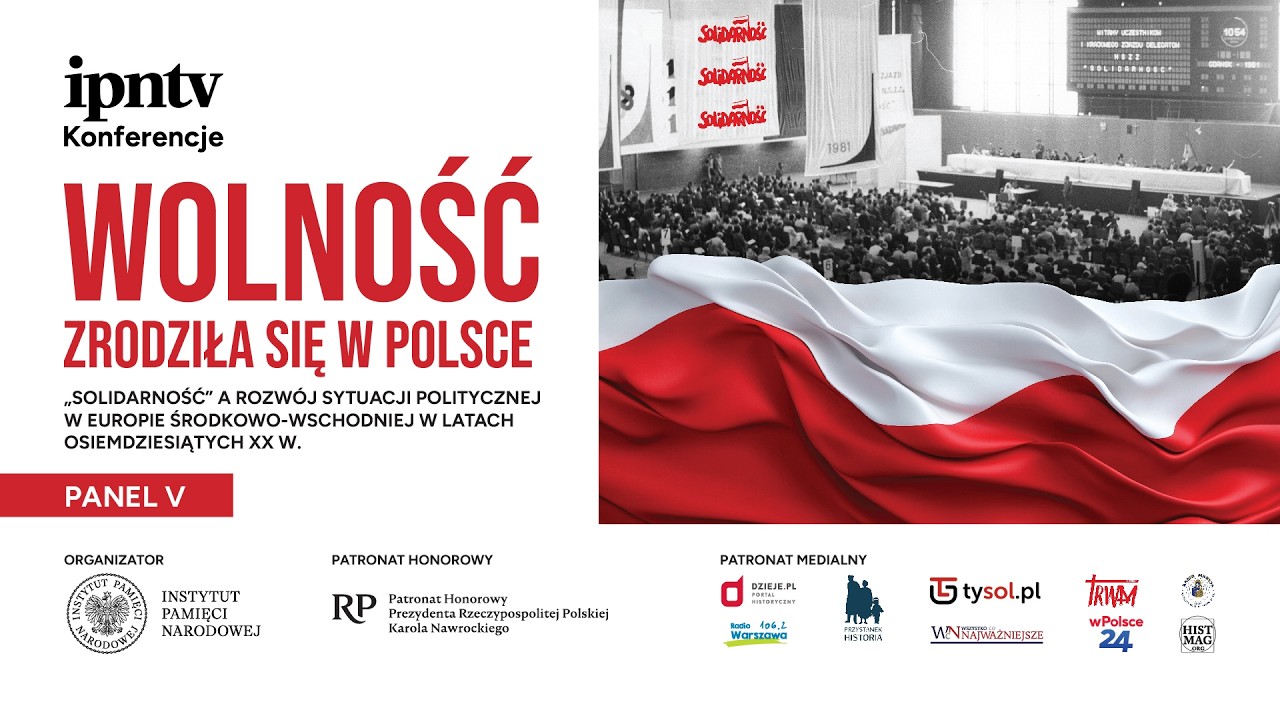
PANEL V
PANEL V
Keywords
Summary
167 words
Critical Evaluation
Value of the Information & Strength of the Argument
The value of the information is high, as it provides new insights into the reactions of communist regimes to Solidarity, based on primary archival research. Dr. Filip-Afloarei’s argument is well-supported by evidence from Romanian and Polish archives, including transcripts of meetings and Securitate operations, demonstrating a nuanced view of Ceaușescu’s stance. He effectively challenges the simplified narrative that Romania was the only country not pressing for invasion, showing that Ceaușescu’s opposition was motivated by self-interest and fear of Soviet troops near Romania’s borders. The argumentation is logical and well-structured, with clear evidence for each claim. Dr. Skobejko’s presentation is also valuable, offering a comparative analysis of Yugoslav media coverage. She uses a solid methodology, comparing central and regional newspapers across key events, and her findings reveal significant differences in framing. The argumentation is coherent, though the presentation is shorter and less detailed than the first, but still provides a useful perspective on the diversity of media narratives within Yugoslavia.
Scientific Rigor, Source Quality, Title Accuracy
The scientific rigor is high. Both presenters are researchers from reputable institutions and base their work on archival sources. Dr. Filip-Afloarei explicitly mentions using Romanian national archives, Securitate archives, and Polish diplomatic correspondence, and he notes that his book will be translated into Polish. Dr. Skobejko uses a range of Yugoslav newspapers and the Tanjug news agency, providing a systematic comparison. The sources are appropriate for the topic and are cited within the presentations. The title ‘PANEL V’ is not descriptive, but it is part of a conference series, so it is acceptable in that context. The content matches the conference theme, and the presentations are well-aligned with the title’s implied scope.
286 words
Title / Content Match
The title 'PANEL V' is generic and does not convey the specific topic, but it is consistent with the conference series structure.
Quality & Reliability
8/10
The video is a scholarly conference panel with two academic presentations based on archival research. The speakers are researchers from recognized institutions (IPN, Romanian Institute for the Investigation of Communist Crimes, Cardinal Stefan Wyszyński University). The content is well-structured, cites specific archives and documents, and includes critical analysis. Minor limitations: one presentation was not delivered (Albania), and the discussion is brief.
Key Moments
Markers derived by PSI from the transcript: the creator did not define chapters.
- Dr. Daniel Filip-Afloarei begins his presentation on Ceaușescu and Solidarity.
- Introduction to the Romanian perspective and the 'impossible comparison'.
- Discussion of Ceaușescu's fear of Soviet invasion and his two-level action.
- Analysis of Romanian surveillance of Polish contacts and Securitate operations.
- Ceaușescu's public criticism of Solidarity and support for martial law.
- Dr. Karolina Skobejko begins her presentation on Yugoslav media reception.
- Comparison of central and regional media framing of the August agreements.
- Analysis of coverage of martial law and the killing of Father Popiełuszko.
- Discussion session begins.
Cited Sources
- Conference playlist — Link to the full conference playlist provided in the video description.
Concurring Sources
- Solidarity (Polish trade union) — General reference on Solidarity, consistent with the panel's topic.
Contribution & Novelties
This panel provides new insights into the reception of Solidarity in Romania and Yugoslavia, challenging simplified narratives. Dr. Filip-Afloarei’s research reveals the complexity of Ceaușescu’s position, showing that his opposition to invasion was coupled with support for internal repression. Dr. Skobejko’s comparative analysis of Yugoslav media highlights regional differences in framing, offering a more nuanced understanding of how the movement was perceived.
Pour aller plus loin :
- Solidarity (Polish trade union) — Overview of the Solidarity movement.
- Nicolae Ceaușescu — Background on the Romanian leader.
- Martial law in Poland — Context on the 1981 crackdown.
- Yugoslav media — Overview of the media landscape in Yugoslavia.
105 words
Radar Profile
The radar profile shows high scores in information quantity, quality, and reliability, with a slightly lower technical level. This indicates a well-researched and informative panel, though the technical depth is moderate, suitable for an academic audience but not overly specialized.