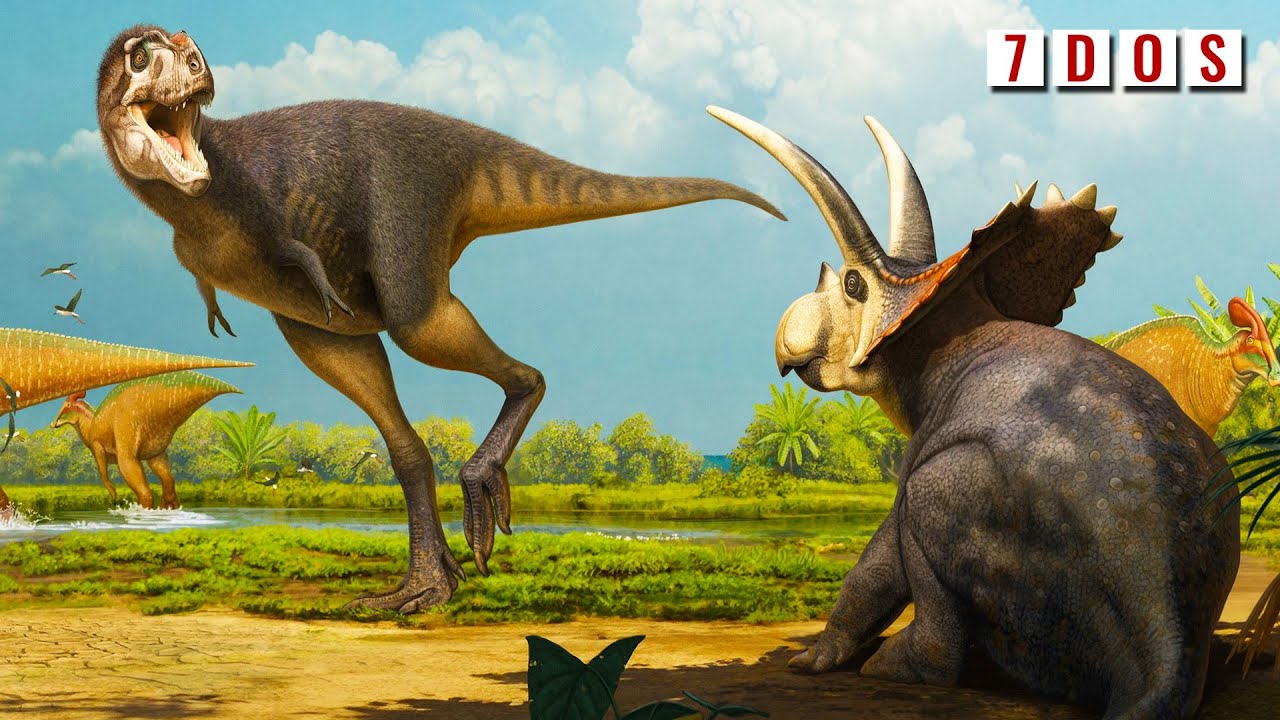
New Tyrannosaur Species Changes the Picture of Tyrant Evolution | 7 Days of Science
Keywords
Summary
118 words
Critical Evaluation
Value of the Information & Strength of the Argument
The video provides valuable information by summarizing multiple recent scientific papers and placing them in a broader context. The argumentation is generally solid: the host explains the significance of each discovery and, where relevant, notes uncertainties or debates (e.g., the horse riding study). The presentation is balanced, and the host clearly distinguishes between confirmed findings and hypotheses. The video’s value lies in its accessibility and the synthesis of diverse topics, making it a useful overview for a general audience interested in science news.
Scientific Rigor, Source Quality, Title Accuracy
The scientific rigor is high: the host cites specific journals and provides links to the original papers in the description. The sources are reputable (e.g., Nature, Science, Cell). The title accurately reflects the main story, and the content matches the title. The video includes a brief promotional segment for World Space Week and the host’s university events, but this does not detract from the scientific content. The host also discloses a personal connection to one of the researchers (his supervisor), which is transparent. Overall, the sources are credible and the title-content alignment is strong.
192 words
Title / Content Match
The title accurately reflects the main story about the new tyrannosaur species, which is prominently featured and discussed in detail.
Quality & Reliability
8/10
The video is a science news roundup with clear references to peer-reviewed studies and direct links to sources. The host presents information accurately and distinguishes between confirmed findings and hypotheses. Minor caveats: some topics are simplified for a general audience, and the host's personal involvement (e.g., supervisor) is disclosed.
Chapters
Cited Sources
- A sub-Earth-mass planet orbiting Barnard’s star — Confirmation of exoplanet Barnard b
- CO2 and H2O2 on Charon's surface — Detection of carbon dioxide and hydrogen peroxide on Charon
- Ancient cheese DNA — Recovery of 3,500-year-old kefir cheese DNA
- Dingo origins study — Study on dingo origins using 3D scanning
- Horse riding and skeletal changes — Study questioning early horse riding evidence
- Labocania aguillonae description — New tyrannosaur species from Mexico
- Akharhynchus martilli description — New pterosaur species from Morocco
- Gondwanax paraisensis description — New silesaurid dinosauromorph from Brazil
- ScienceDaily article on Barnard's star — News article about the exoplanet discovery
- Sci.News article on Barnard b — News article about the exoplanet discovery
- Space.com article on Charon — News article about Charon findings
- Sci.News article on Charon — News article about Charon findings
- World Space Week official site — Promotion of World Space Week
- World Space Week about page — Information about World Space Week
- Eventbrite for Space in the Movies talk — Event at University of Portsmouth
- Sci.News article on ancient cheese — News article about ancient cheese DNA
- ScienceDaily article on dingo origins — News article about dingo origins
- ScienceDaily article on horse riding — News article about horse riding origins
Concurring Sources
- ScienceDaily article on Barnard's star — Corroborates the exoplanet discovery
- Sci.News article on ancient cheese — Corroborates the ancient cheese DNA findings
- ScienceDaily article on dingo origins — Corroborates the dingo origins study
Dissenting Sources
- Study on horse riding origins — This study disputes earlier claims of horse riding in the Yamnaya culture, as discussed in the video.
External References
Contribution & Novelties
The video synthesizes recent scientific discoveries, with the main novelty being the description of Labocania aguillonae, which provides evidence for a distinct southern lineage of tyrannosaurs in Laramidia. This challenges previous assumptions about tyrannosaur distribution and diversity. The video also highlights the recovery of ancient cheese DNA, offering insights into human-microbe coevolution. The presentation of multiple discoveries in a single episode adds value by connecting disparate fields.
Pour aller plus loin :
- Tyrannosauroidea — Overview of the tyrannosauroid clade, relevant to the new species.
- Laramidia — The ancient continent where the new tyrannosaur was found.
- Kefir — The type of cheese from which DNA was recovered.
- Dingo — Background on the dingo and its origins.
- Silesauridae — The group to which the new dinosauromorph belongs.
125 words
Radar Profile
The radar profile shows high scores in information quantity, quality, and reliability, with a slightly lower technical level, indicating a well-researched yet accessible science news video.
💬 Très positif. Sur les 30 commentaires analysés, les spectateurs expriment un fort enthousiasme pour les découvertes présentées, notamment le fromage ancien et les nouveaux dinosaures, avec des plaisanteries et des références culturelles, sans critiques négatives.