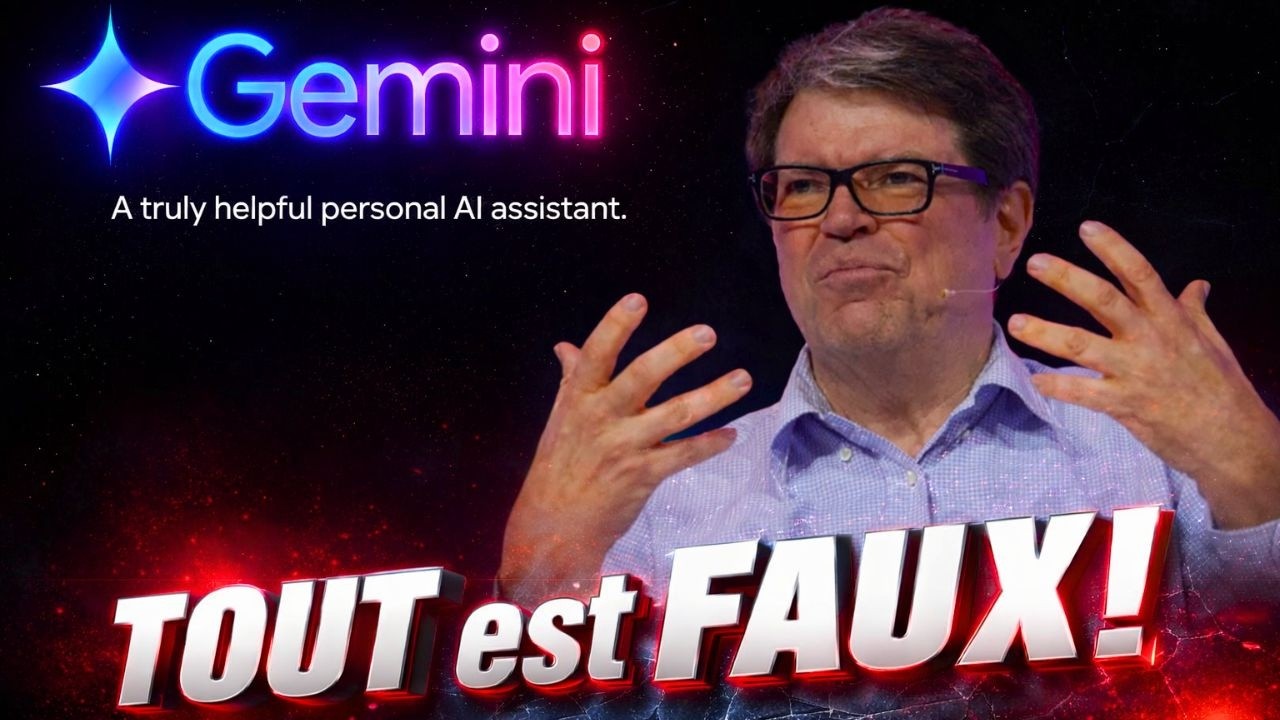
La bulle de l'IA est pire que vous le pensez | Voici la vérité
The AI Bubble Is Worse Than You Think | Here Is the Truth
Keywords
Summary
155 words
Critical Evaluation
Value of the Information & Strength of the Argument
The video provides a valuable critique of naive prompting and highlights real limitations of current AI models, such as performance degradation with complex tasks and context window constraints. The argumentation is largely based on personal experience and a referenced Apple study, but the evidence is presented anecdotally and lacks rigorous scientific detail. The creator’s claim about a 20,000-token inflection point is presented as a hypothesis, which is honest, but the overall argument is persuasive rather than strictly evidence-based. The value lies in the practical advice to use memory storage and structured workflows, though the effectiveness is not independently verified.
Scientific Rigor, Source Quality, Title Accuracy
The video references an Apple study and benchmarks like SWE-bench and MRCR-V2, but does not provide direct URLs or specific citations, making verification difficult. The description includes links to the creator’s own platforms and promotional materials, but no external scientific sources. The title’s promise of revealing the AI bubble is only partially fulfilled, as the content focuses on prompting techniques rather than a comprehensive analysis of the bubble. The adéquation between title and content is moderate, with the bubble theme serving as a hook. The creator’s expertise is asserted but not substantiated with credentials.
208 words
Title / Content Match
The title promises a broad critique of the AI bubble, but the content focuses mainly on prompting techniques and limitations, with the bubble theme serving as a framing device.
Quality & Reliability
5/10
The video presents a personal and critical perspective on AI prompting, referencing an Apple study and benchmarks, but lacks precise citations and relies heavily on anecdotal evidence and promotional content.
Key Moments
Markers derived by PSI from the transcript: the creator did not define chapters.
- Introduction: critique of AI hype and promise to show how to become 'dangerous' with AI.
- Example of a naive prompt for market analysis, criticized as producing generic text.
- Discussion of the Apple study on reasoning vs. immediate models, with performance degradation.
- Explanation of reasoning tokens and the 20,000-token inflection point.
- Introduction of the 'memory' (MNT) system to overcome context limitations.
- Demonstration of using ChatGPT for extended work sessions with memory storage.
- Comparison between simple prompt and memory-enhanced prompt results.
- Conclusion: AI does not truly reason, and true agents are not yet available.
Cited Sources
- Parlons IA - Formations — Lien vers les formations proposées par le créateur, mentionné comme ressource pour apprendre à utiliser l'IA.
- Chaîne Dailymotion — Lien vers la chaîne Dailymotion du créateur, mentionné dans la description.
- Blog Medium — Lien vers le blog du créateur, mentionné dans la description.
- Podcast — Lien vers le podcast du créateur, mentionné dans la description.
- SEO Agent IA — Lien vers un outil IA, mentionné dans la description.
Concurring Sources
- Apple study on reasoning models — Referenced in the video, but no direct URL provided.
Dissenting Sources
- Claims of AI replacing jobs — The video argues that AI cannot replace jobs with simple prompts, contradicting common marketing claims.
Contribution & Novelties
The video offers a practical critique of common prompting methods and introduces a personal technique using memory storage to extend AI’s effective context. It highlights the gap between marketing claims and actual AI capabilities, which is a valuable perspective for users.
Pour aller plus loin :
- Chain-of-thought prompting — Pertinent for understanding reasoning methods.
- Lost in the middle — Relevant to context window limitations.
- SWE-bench — Benchmark mentioned in the video for coding tasks.
74 words
Radar Profile
The radar profile shows moderate scores across all dimensions, with a slight peak in technical level and a dip in reliability, reflecting the video's practical but anecdotal approach.
💬 Positif. Sur les 30 commentaires analysés, la majorité exprime de l'intérêt et de la gratitude pour les conseils pratiques, avec quelques demandes de démonstrations supplémentaires.