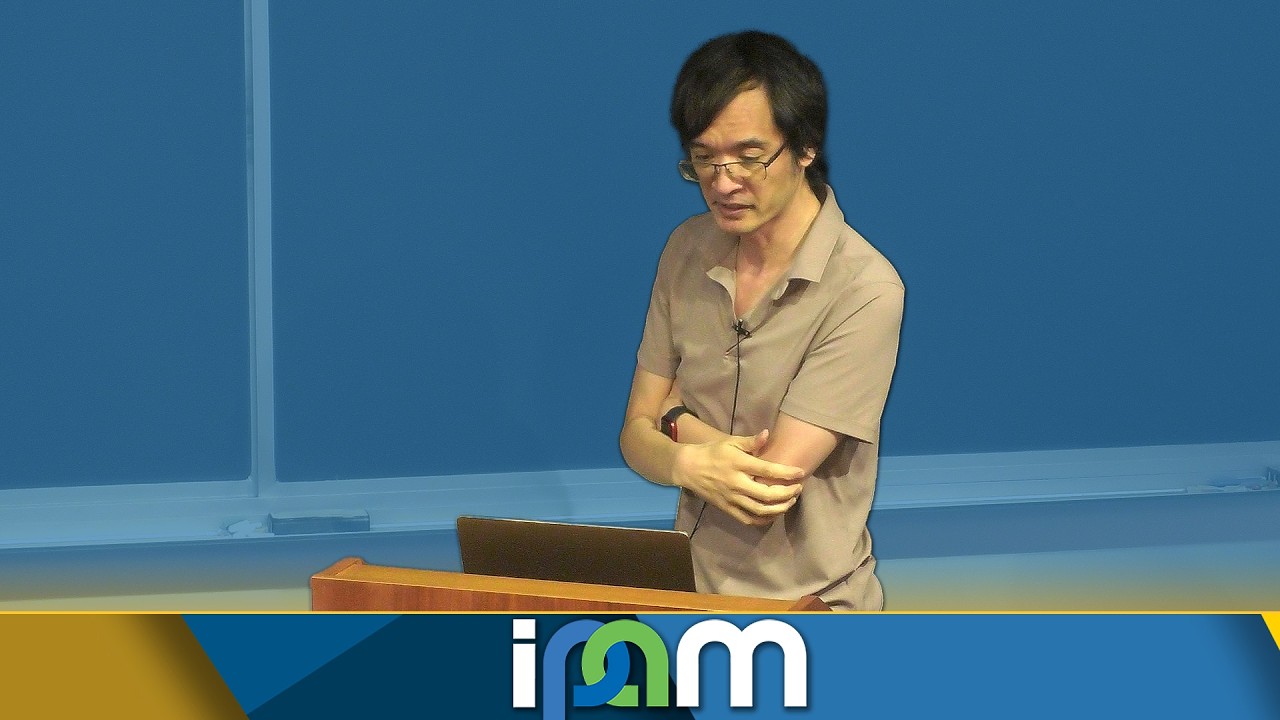
Terence Tao - Reflections on the Foundations of Interpretability workshop - IPAM at UCLA
Keywords
Summary
179 words
Critical Evaluation
Value of the Information & Strength of the Argument
The talk’s value lies in its unique perspective from a top mathematician on the practical challenges of using AI in research. Tao’s argument is well-structured, moving from a general observation (decoupling of answers and understanding) to specific examples (AI-generated counterexample, his own interaction with an AI) and a proposed direction (using constraints and interpretability). He effectively uses Thurston’s essay to ground his points in historical context. The argumentation is persuasive, though it relies on anecdotal evidence and personal experience rather than systematic data. The proposal to achieve AGI ‘from above’ by constraining AI is thought-provoking but speculative.
Scientific Rigor, Source Quality, Title Accuracy
Tao demonstrates scientific rigor by referencing a specific, well-known essay (Thurston, 1994) and describing his own projects (Equational Theories) and interactions with AI. He is careful to distinguish between his field and interpretability, and acknowledges the limitations of his perspective. The title accurately describes the content as reflections, which matches the informal, personal nature of the talk. No external sources are cited beyond the workshop itself, but the internal references are credible.
184 words
Title / Content Match
The title accurately reflects the content: Tao shares his reflections on the workshop and broader thoughts on interpretability and AI in mathematics.
Quality & Reliability
8/10
The talk is a personal reflection by a leading mathematician, Terence Tao, on the impact of AI on mathematical practice. It is not a peer-reviewed study but offers expert opinion grounded in his extensive experience and specific examples. The content is coherent, well-argued, and references a known essay by Bill Thurston. However, it is subjective and lacks empirical data or systematic analysis.
Key Moments
Markers derived by PSI from the transcript: the creator did not define chapters.
- Introduction and context: Tao explains his role as organizer and his last-minute decision to give a talk.
- Tao introduces the core theme: the decoupling of answers and understanding in mathematics, accelerated by AI.
- Discussion of Bill Thurston's 1994 essay and its relevance to current AI challenges.
- Tao explains the concept of 'natural friction' in human-written texts and its absence in AI-generated text.
- Anecdote about using AI to explore a counterexample to the Jacobian conjecture, illustrating the difficulty of extracting insight from AI output.
- Proposal to achieve AGI 'from above' by constraining AI capabilities to improve human understanding.
- Mention of the Equational Theories project as an example of crowdsourcing mathematics and the role of AI in solving problems.
- Concluding thoughts on the potential of interpretability to recouple answers and insight.
Cited Sources
- Foundations of Interpretability Workshop — The workshop where this talk was presented.
Concurring Sources
- On Proof and Progress in Mathematics — Thurston's essay, which Tao cites to support his arguments about mathematical understanding.
Contribution & Novelties
The talk offers a novel perspective on AI interpretability from a leading mathematician, focusing on the practical challenges of using AI-generated proofs and the importance of human understanding. It introduces the concept of ’natural friction’ in mathematical exposition and suggests that constraining AI capabilities could be more beneficial than scaling them up.
Pour aller plus loin :
- On Proof and Progress in Mathematics — Bill Thurston’s influential essay, directly referenced in the talk.
- Equational Theories Project — Terence Tao’s project on crowdsourcing mathematical proofs, mentioned in the talk.
- Interpretability in Machine Learning — General overview of interpretability concepts.
98 words
Radar Profile
The radar profile shows high scores in quality and reliability, reflecting the speaker's expertise and coherent argumentation. The quantity of information is moderate, as the talk is a personal reflection rather than a comprehensive review. The technical level is moderate, accessible to a general scientific audience.