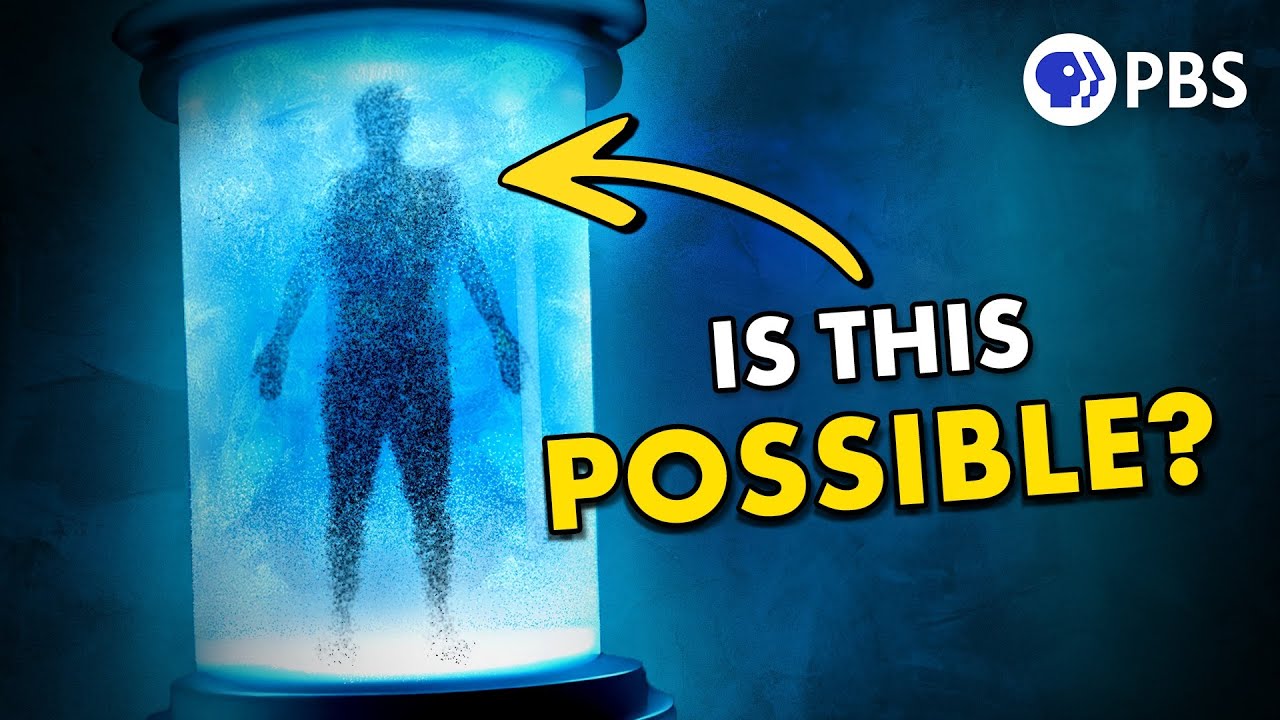
Could Humans Hibernate?
Keywords
Summary
128 words
Critical Evaluation
Value of the Information & Strength of the Argument
The video provides valuable information by clarifying misconceptions about hibernation and presenting a range of animal adaptations. The argumentation is solid, building from basic definitions to specific examples and then to the human context. It uses analogies (e.g., car engine) to explain concepts, making them accessible. The discussion of NASA research adds credibility and a forward-looking perspective. The video does not oversimplify the challenges, acknowledging the hurdles of immune suppression and waste management.
Scientific Rigor, Source Quality, Title Accuracy
The video demonstrates scientific rigor by referencing studies and NASA research, and it provides a link to sources in the description. The title accurately reflects the content. The video distinguishes between sleep and hibernation, and explains the physiological mechanisms accurately. It also notes that hibernation is not a deep sleep, which is a common misconception. The content is well-researched and presented in an engaging manner.
153 words
Title / Content Match
The title accurately reflects the content, which explores the possibility of human hibernation and its potential applications.
Quality & Reliability
8/10
The video presents a well-structured overview of hibernation, covering multiple types (torpor, estivation, brumation) and citing scientific research, including NASA studies. It distinguishes between sleep and hibernation, and explains physiological mechanisms. While it simplifies some details for a general audience, it avoids major inaccuracies and includes references.
Key Moments
Markers derived by PSI from the transcript: the creator did not define chapters.
- Introduction: question of human hibernation and animal examples.
- Explanation of winter survival strategies: push through, migrate, or hibernate.
- Definition of dormancy and difference from sleep.
- Examples of torpor in hummingbirds and estivation in frogs.
- Brumation in reptiles and wood frogs' antifreeze.
- True hibernation in mammals, triggered by hypothalamus.
- Physiological changes: brown fat, body temperature drops, occasional waking.
- Benefits of hibernation: lower mortality, anti-aging.
- Why humans don't hibernate: evolution and brain.
- NASA research on human hibernation for space travel.
Cited Sources
- Why Don't Humans Hibernate? - References — List of scientific references cited in the video.
Concurring Sources
- Hibernation (Wikipedia) — General information on hibernation aligns with the video's content.
Contribution & Novelties
The video synthesizes existing knowledge on hibernation and applies it to the speculative but scientifically grounded question of human hibernation. It highlights NASA’s research and the potential for space travel, which is a novel angle. The explanation of different dormancy types is clear and comprehensive.
Pour aller plus loin :
- Hibernation (Wikipedia) — Overview of hibernation in animals.
- Torpor (Wikipedia) — Explanation of torpor and its role.
- NASA’s research on human hibernation — NASA’s interest in human hibernation for space travel.
81 words
Radar Profile
The radar profile shows high scores in information quantity and quality, with a moderate technical level. This indicates a well-balanced video that is informative and accessible, with a slight emphasis on providing substantial content rather than deep technical detail.
💬 Positive. Sur les 30 commentaires analysés, le public est enthousiaste et engage, partageant des anecdotes personnelles et des réflexions sur l'hibernation, avec un ton humoristique et curieux.