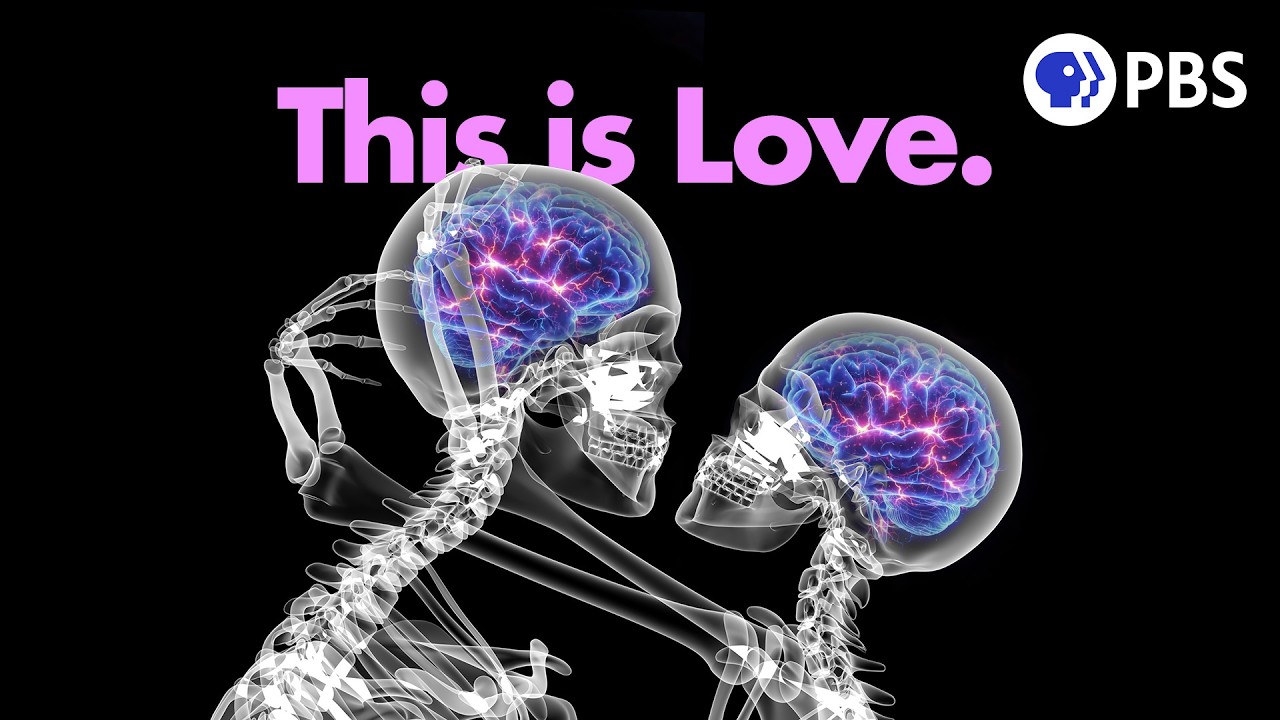
Scientists Finally Figured Out What Love Is For
Keywords
Summary
152 words
Critical Evaluation
Value of the Information & Strength of the Argument
The video provides valuable information by synthesizing research from neuroscience, psychology, and evolutionary biology to explain the function of romantic love. It presents a coherent argument that love is an evolutionary adaptation for commitment, supported by evidence from brain imaging, cross-cultural studies, and animal models. The argumentation is solid, building logically from the neural mechanisms to the evolutionary rationale, and addresses potential counterarguments such as the defection problem. The use of specific examples (e.g., prairie voles, cross-cultural surveys) strengthens the credibility of the claims.
Scientific Rigor, Source Quality, Title Accuracy
The video demonstrates scientific rigor by referencing specific studies and providing a link to a reference list. The information is presented accurately, with appropriate caveats about open questions. The title accurately reflects the content, which focuses on the evolutionary purpose of love. The video does not overstate claims and acknowledges the complexity of the topic. The sources cited are credible and relevant, and the video distinguishes between established findings and hypotheses.
170 words
Title / Content Match
The title accurately reflects the content, which explains the evolutionary and neurobiological purpose of romantic love.
Quality & Reliability
8/10
The video presents a well-structured synthesis of established research in neuroscience, psychology, and evolutionary biology, citing specific studies (e.g., fMRI studies of romantic love, prairie vole research) and providing a reference list. The information is accurate and up-to-date, though presented in a simplified manner for a general audience.
Key Moments
Markers derived by PSI from the transcript: the creator did not define chapters.
- Introduction to the irrational behaviors people do for love.
- Explanation of brain imaging studies showing love activates reward circuits.
- Helen Fisher's three-system model of love: lust, attraction, attachment.
- Discussion of serotonin drop and OCD-like symptoms in love.
- Evolutionary rationale: love as a commitment device for raising helpless infants.
- Cross-cultural universality of romantic love.
- Prairie vole study and the role of oxytocin in pair bonding.
- Game theory perspective on defection and the role of jealousy and heartbreak.
Cited Sources
- References for 'What Love Is For' — List of scientific references cited in the video.
- Be Smart Website — Official website of the show, providing additional information and resources.
Concurring Sources
- Helen Fisher's research — Fisher's three-system model of love is a key framework presented in the video.
- Prairie vole studies — Research on prairie voles supports the role of oxytocin in pair bonding.
Contribution & Novelties
The video provides a clear and engaging synthesis of existing research, making complex scientific concepts accessible. It highlights the evolutionary function of love as a commitment device, which is a well-supported but not universally known perspective. The video also connects neuroscience, psychology, and evolutionary biology in a cohesive narrative.
Pour aller plus loin :
- Helen Fisher’s research on love — Overview of Fisher’s work on the biology of love.
- Oxytocin and pair bonding — General information on oxytocin’s role in social bonding.
- Prairie vole monogamy — Details on the prairie vole model for studying pair bonding.
- Game theory in evolutionary biology — Explains the defection problem and evolutionary stable strategies.
110 words
Radar Profile
The radar profile shows high scores in information quantity and quality, reflecting the video's comprehensive and accurate coverage. The technical level is moderate, indicating a balance between depth and accessibility. Overall, the video is highly reliable and informative.
💬 Très positif. Sur les 30 commentaires analysés, la grande majorité exprime un enthousiasme marqué pour le contenu, avec des anecdotes personnelles et des réflexions sur la science de l'amour, bien que quelques commentaires critiques soulèvent des nuances.