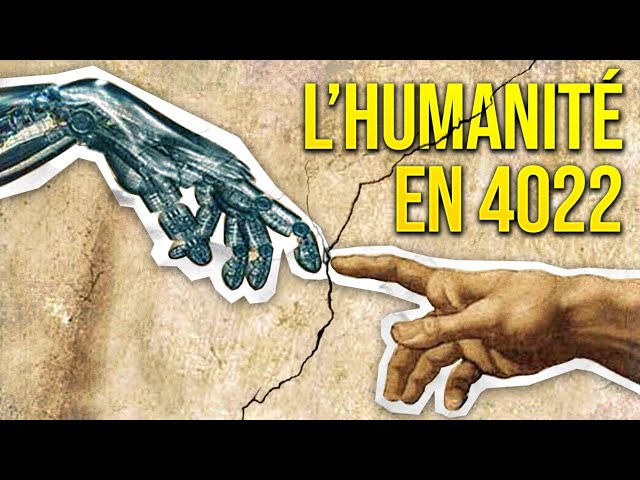
Que penseront les gens du futur de... nous ?
What will people in the future think of... us?
Keywords
Summary
173 words
Critical Evaluation
Value of the Information & Strength of the Argument
The video provides substantial value by raising thought-provoking questions about the interpretation of archaeological evidence and the challenges of transmitting culture across time. The argumentation is solid: it combines concrete facts, such as global plastic production rates and the slow decomposition of modern bodies, with reasoned speculations about future archaeological methodologies. The presentation is logical, moving from material traces to symbolic interpretation, and each point is supported by references to real studies or examples. The reliance on established concepts like cultural icons and the skull symbol strengthens the credibility of the discussion, though some parts remain deliberately provisional, acknowledging the inherent uncertainty of predicting the far future.
Scientific Rigor, Source Quality, Title Accuracy
The video demonstrates a rigorous approach by citing specific sources in its description, including academic references on decomposition, archaeological methodology, and time capsules. The explanations align with established archaeological practices, and the video acknowledges the limitations of its own predictions. The title is well-matched to the content, as it directly addresses the central theme without exaggeration. The inclusion of the exhibition ‘Futur antérieur’ and scholarly articles adds depth and credibility, showcasing a commitment to informed speculation rather than baseless fantasy.
202 words
Title / Content Match
The title accurately captures the video's central question about how future generations will perceive our civilization.
Quality & Reliability
7/10
The video presents a well-structured thought experiment grounded in archaeological concepts and references credible sources, though some speculative claims lack direct evidence. Overall, it maintains a reliable balance between factual content and reasoned conjecture.
Key Moments
Markers derived by PSI from the transcript: the creator did not define chapters.
- Introduction to the thought experiment about future perceptions of our era.
- Discussion of plastic as the dominant material that will define our period for future archaeologists.
- Examination of human decomposition and the impact of preservatives on the archaeological record.
- Analysis of the fragility of digital data and predictions about the text-based interpretation of our era.
- Description of time capsules and the challenges of interpreting cultural symbols like memes and pictograms.
- Conclusion and invitation for viewers to leave messages for future generations.
Cited Sources
- Pourquoi les cadavres ne se décomposent-ils plus ? — Source cited for the observation that body decomposition is slowing down.
- Capsules temporelles, modes d'emploi. Un antidote pour la fin d’un monde — Academic article on time capsules referenced in the video.
- Exposition 'Futur antérieur' — Exhibition that interpreted everyday objects from a future archaeological perspective.
- Production mondiale de plastique — Source for the global plastic production figures mentioned.
- Les archéologues, nouveaux damnés de la terre — Article on the precariousness of archaeologists' working conditions, used as a supporting reference.
Concurring Sources
- Guide des méthodes de l'archéologie — Reference work mentioned in the video's description (Demoule et al., 2020) that aligns with standard archaeological methodology.
- La tête de mort est gaie et M. Beurk est cool — Article cited in description (Vaillant et al., 2009) supporting the discussion on cultural symbolism.
External References
Contribution & Novelties
The video innovatively bridges archaeological methodologies with futuristic speculation, offering a concrete and engaging framework for thinking about the long-term preservation of contemporary culture. Its main contribution lies in making complex ideas about taphonomy, semiotics, and cultural transmission accessible to a broad audience. The call to action for viewers to write messages within the comments creates a participatory dimension that extends the video’s own temporal capsule concept.
Pour aller plus loin :
- Deep time — A foundational concept for understanding the immense timescales considered in the video.
- Archaeological theory — Provides context for the interpretative challenges discussed, including the influence of present-day biases.
- Time capsule — An overview of historical and contemporary time capsule projects, complementing the video’s examples.
119 words
Radar Profile
The radar profile shows high scores for information quantity and quality, reflecting the video's dense but well-structured content. Technique is moderate, indicating a balance between accessible explanation and specialized vocabulary. Reliability is strong, underpinned by cited sources, while the global note benefits from the engaging presentation.
💬 Very positive. The 30 comments analyzed show overwhelming enthusiasm, with viewers actively participating in the proposed exercise by leaving messages for future generations, expressing humor, affection, and reflective thoughts about legacy and human civilization.