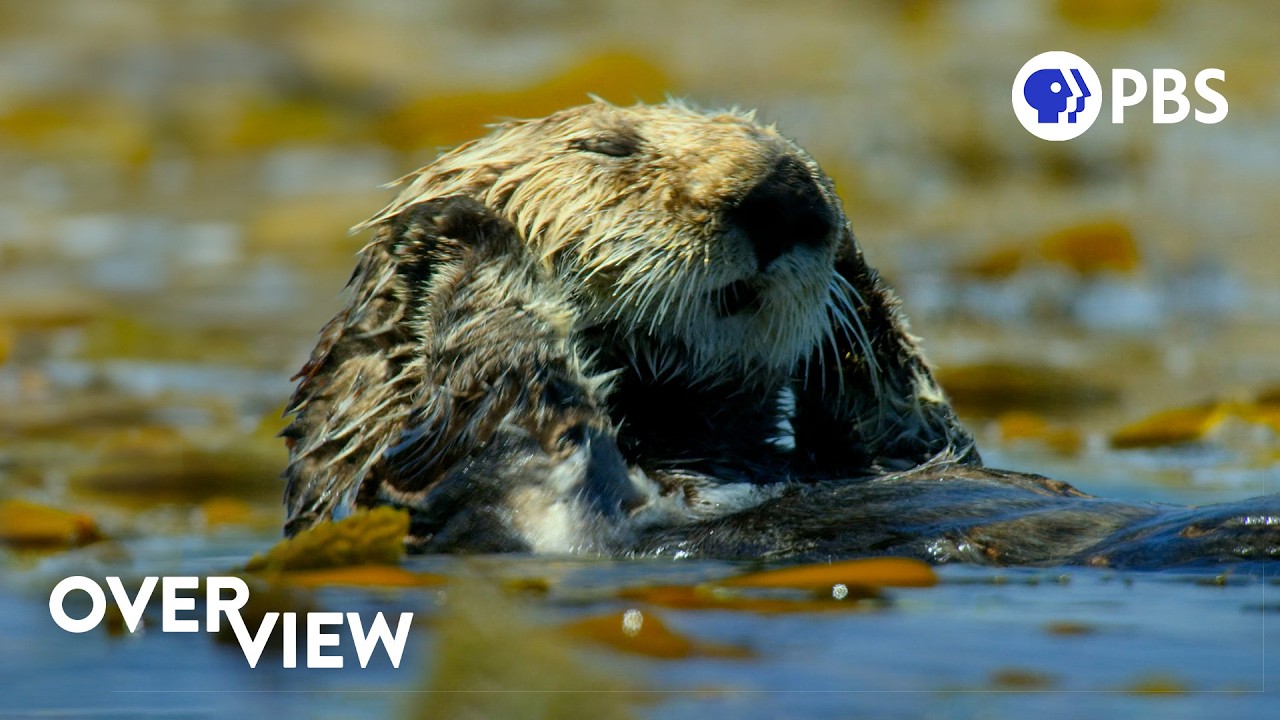
How Otters Are Saving Earth’s Underwater Forests
Keywords
Summary
146 words
Critical Evaluation
Value of the Information & Strength of the Argument
The video provides valuable information about the ecological importance of kelp forests and the cascading effects of species loss. It effectively explains complex concepts like trophic cascades and keystone species in an accessible manner, using clear examples and visuals. The argumentation is solid, supported by interviews with experts and practitioners who provide firsthand insights into conservation efforts. The narrative is coherent, moving from the problem (kelp decline) to the causes (historical otter hunting, disease, climate events) and then to solutions (otter rehabilitation, kelp farming). The inclusion of specific data (e.g., 96% loss, 350 km of coastline) strengthens the credibility. However, the video could have benefited from more detailed scientific references or data sources to further substantiate the claims.
Scientific Rigor, Source Quality, Title Accuracy
The scientific rigor is generally high, with accurate explanations of ecological principles and the involvement of professionals in the field. The sources are primarily the interviewed experts and the host’s narration, but no specific studies or publications are cited, which limits the ability to verify the information independently. The title accurately reflects the content, focusing on the role of otters in saving kelp forests. The video is well-produced and aligns with PBS Terra’s reputation for educational content. The comments reflect a positive reception, with viewers expressing emotional responses and appreciation for the conservation efforts, though some express sadness about the extent of the loss.
237 words
Title / Content Match
The title accurately reflects the content, which focuses on the role of sea otters in maintaining kelp forest ecosystems and the conservation efforts to restore them.
Quality & Reliability
8/10
The video presents a well-structured documentary with clear explanations of ecological concepts (trophic cascade, keystone species) and features interviews with researchers and practitioners. The information is consistent with established scientific knowledge, though it lacks detailed citations or references to specific studies, which slightly reduces its reliability score.
Key Moments
Markers derived by PSI from the transcript: the creator did not define chapters.
- Introduction to kelp forests as a vital ecosystem.
- Explanation of the trophic cascade involving otters, urchins, and kelp.
- Historical context: fur trade decimated otter populations.
- Interview with Sandrine Hazan about otter rehabilitation.
- Discussion of sea star wasting disease and the Blob causing kelp decline.
- Tristan explains aerial mapping of kelp refugia.
- Andrew Kim describes lab-grown kelp planting methods.
- Success of kelp planting and its impact on fish populations.
- Sandrine tracks released otter 956 and discusses range expansion.
- Conclusion: hope for kelp forest restoration and the importance of continued efforts.
Cited Sources
- PBS Terra Donation Page — Support for PBS member stations, mentioned in the video description.
Concurring Sources
- PBS Terra — The channel is known for science and nature documentaries, aligning with the video's content.
Contribution & Novelties
The video provides a compelling and accessible overview of the kelp forest crisis and the multifaceted conservation efforts, including otter rehabilitation and innovative kelp farming. It highlights the interconnectedness of species and the importance of keystone species in ecosystem health. The documentary stands out for its optimistic tone and emphasis on actionable solutions.
Pour aller plus loin :
- Trophic cascade — Explains the ecological concept central to the video.
- Sea otter — Provides detailed information on the species and its role as a keystone predator.
- Kelp forest — Overview of kelp forest ecosystems and their importance.
- Sea urchin — Background on the primary herbivore in the trophic cascade.
- The Blob (marine heatwave) — Context on the marine heatwave that contributed to kelp decline.
123 words
Radar Profile
The radar profile shows high scores in information quantity, quality, and reliability, with a slightly lower technical level, indicating the video is informative and trustworthy but accessible to a general audience. The balance between these dimensions suggests a well-rounded educational piece.
💬 Positif : Sur les 30 commentaires analysés, le public exprime majoritairement de l'appréciation pour le contenu éducatif et les efforts de conservation, avec une émotion partagée entre tristesse face à la perte des forêts de varech et espoir pour les initiatives de restauration.