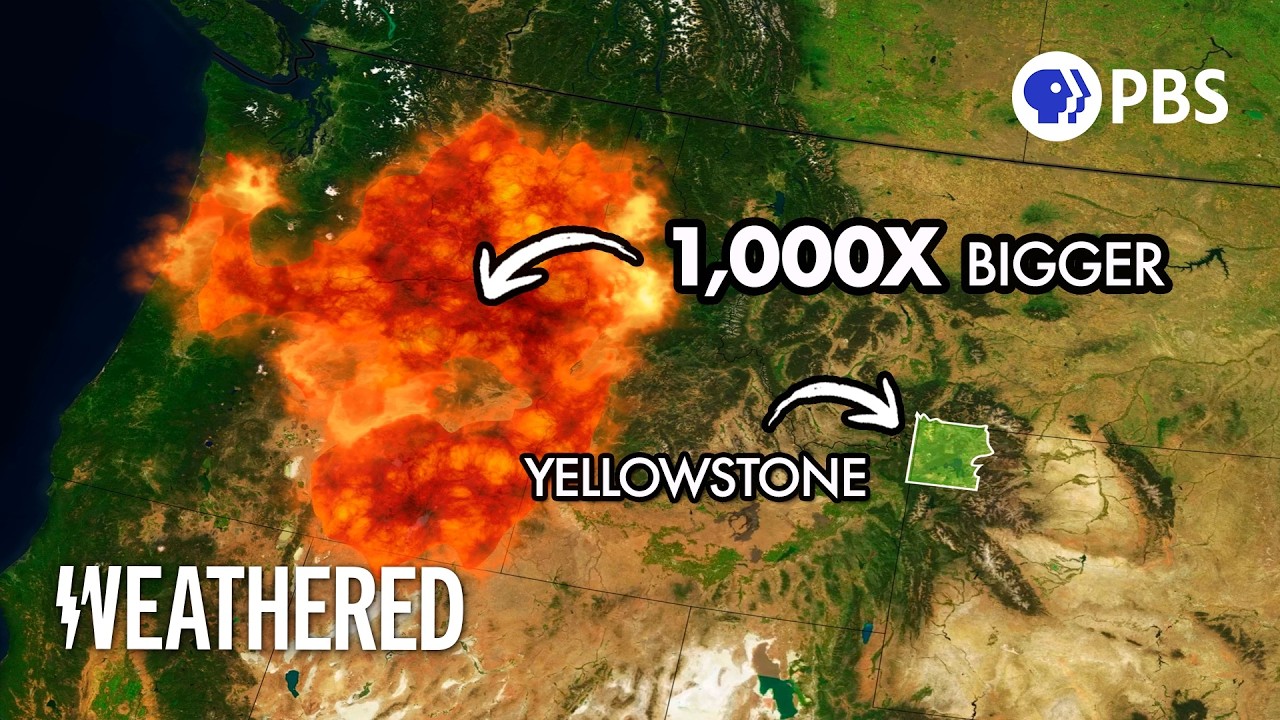
There's Something MUCH Bigger Than Yellowstone. And It Will Happen Again.
Keywords
Summary
174 words
Critical Evaluation
Value of the Information & Strength of the Argument
The video provides valuable information by contextualizing Yellowstone within the broader framework of Large Igneous Provinces, offering a perspective that is often missing in popular media. It effectively argues that while Yellowstone is a significant hazard, LIPs are the true ‘giants’ of volcanic activity and are directly linked to mass extinctions. The argumentation is solid, building from a familiar example (Yellowstone) to a less-known but more impactful phenomenon (LIPs), and uses expert testimony and geological evidence to support its claims. The comparison between past rapid warming events and current anthropogenic climate change is particularly compelling, as it underscores the urgency of the present situation without resorting to alarmism.
Scientific Rigor, Source Quality, Title Accuracy
The video demonstrates scientific rigor by featuring interviews with recognized experts, such as Michael Poland, and by referencing well-established geological concepts and events. The quality of sources is high, though the video does not provide direct citations to specific scientific papers, which would enhance its credibility for a more technical audience. The title is accurate and engaging, effectively capturing the video’s central theme. The content aligns well with the title, as it indeed discusses something ‘much bigger than Yellowstone’ and its potential to happen again. The video also benefits from being produced by PBS Terra, a reputable source for science communication.
224 words
Title / Content Match
The title accurately reflects the content, which contrasts Yellowstone with the larger-scale Large Igneous Provinces and their role in past mass extinctions.
Quality & Reliability
8/10
The video presents a well-structured scientific narrative, featuring expert interviews (e.g., Michael Poland, scientist-in-charge of Yellowstone Volcano Observatory) and referencing established geological concepts (Large Igneous Provinces, PETM). It clearly distinguishes between hypothetical scenarios and current scientific consensus, and avoids sensationalism by emphasizing the low immediate risk of Yellowstone. However, it does not provide detailed citations or links to specific studies, and some simplifications are inherent to the popular science format.
Key Moments
Markers derived by PSI from the transcript: the creator did not define chapters.
- Introduction to Yellowstone as a supervolcano and its potential catastrophic effects.
- Comparison of eruption sizes: St. Helens, Pinatubo, Tambora, and Yellowstone.
- Discussion of the potential impacts of a Yellowstone eruption, including ash fallout and global cooling.
- Introduction of Large Igneous Provinces (LIPs) as much larger volcanic events.
- Explanation of mantle plumes and their role in creating LIPs, with the Columbia River Flood Basalts as an example.
- Connection between LIPs and mass extinctions, with a focus on the Siberian Traps and the Permian-Triassic extinction.
- Comparison of ancient rapid warming events (PETM) to current anthropogenic climate change.
- Conclusion emphasizing that while LIPs will happen again, the immediate threat is human-caused climate change.
Cited Sources
- PBS Terra Donation Page — Support for PBS Terra and its content.
- Weathered Merch Store — Merchandise related to the Weathered series.
- PBS Digital Studios Audience Survey — Audience feedback survey for PBS Digital Studios.
Concurring Sources
- Large Igneous Province - Wikipedia — Supports the definition and significance of LIPs as described in the video.
- Yellowstone Caldera - Wikipedia — Provides background on Yellowstone's volcanic history and current monitoring.
Dissenting Sources
- No discordant sources identified — The video's claims align with current scientific consensus; no conflicting sources were found.
Contribution & Novelties
The video’s original contribution lies in its accessible synthesis of the link between Large Igneous Provinces and mass extinctions, making a complex geological topic understandable to a general audience. It effectively bridges the gap between the familiar threat of Yellowstone and the less-known but more significant role of LIPs in Earth’s history. The comparison to current climate change is a valuable perspective that encourages viewers to consider the long-term implications of rapid warming.
Pour aller plus loin :
- Large Igneous Province — Provides a comprehensive overview of LIPs, their formation, and their environmental impacts.
- Permian–Triassic extinction event — Details the most severe mass extinction, often linked to the Siberian Traps.
- Paleocene–Eocene Thermal Maximum — Explains the rapid warming event used as an analog for current climate change.
127 words
Radar Profile
The radar profile shows high scores in information quantity and quality, reflecting the video's dense but accessible content. The technical level is moderate, suitable for a general audience, while reliability is high due to expert input and reputable production. The overall balance indicates a well-rounded educational piece.
💬 Très positif. Sur les 30 commentaires analysés, les spectateurs expriment une forte appréciation pour la qualité éducative et la rigueur scientifique de la vidéo, avec de nombreux témoignages personnels sur des éruptions passées et des réflexions sur le changement climatique.