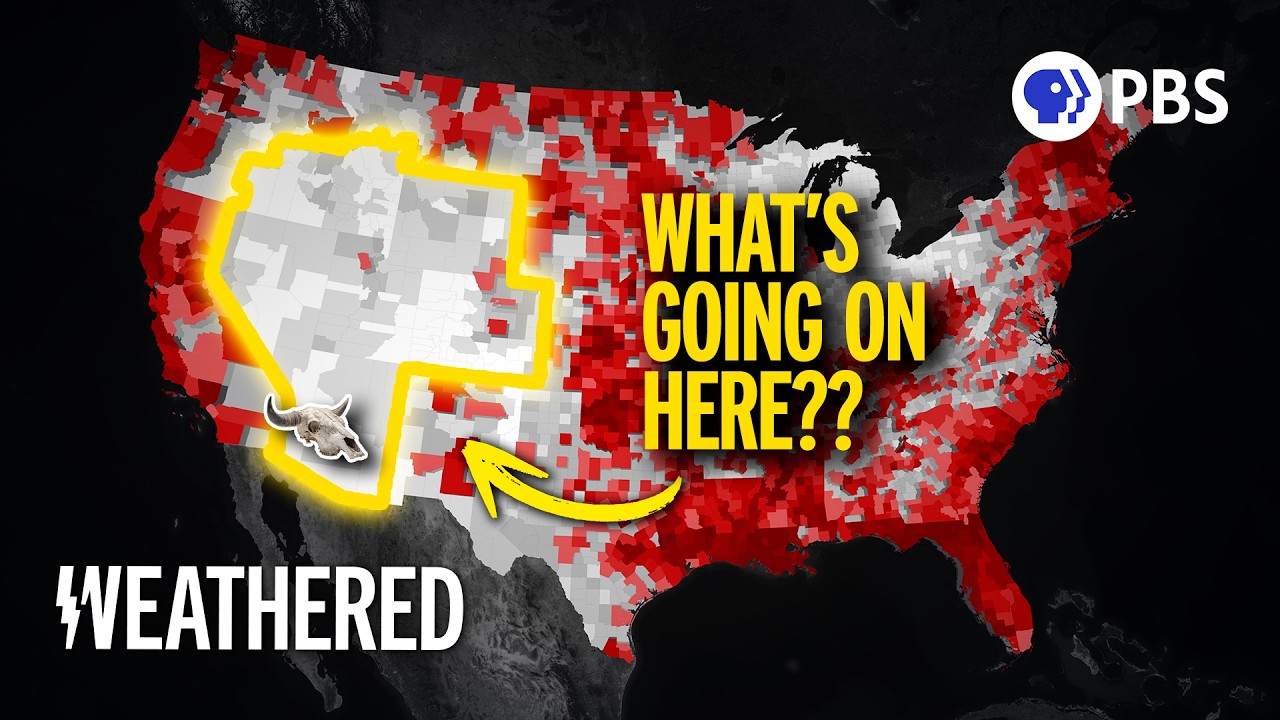
Why America's Deadliest Disaster is Essentially Invisible
Keywords
Summary
179 words
Critical Evaluation
Value of the Information & Strength of the Argument
The video provides valuable information by connecting a visual anomaly (the map) to systemic policy flaws. It effectively uses expert testimony and data to argue that heat is underrecognized as a disaster. The argumentation is solid: it builds from the map observation, to the explanation of disaster declaration criteria, to the consequences of this gap, and finally to potential solutions. The inclusion of contrasting examples (Vermont floods vs. Phoenix heat) strengthens the case. The video also highlights the economic and health impacts, making the argument compelling. However, it could have delved deeper into the political and economic interests that maintain the current system, and it does not explore potential counterarguments in depth.
Scientific Rigor, Source Quality, Title Accuracy
The video demonstrates strong scientific rigor by relying on data from FEMA, the Lancet Countdown, and interviews with experts. The sources are credible and relevant. The title accurately reflects the content, which is a critical analysis of disaster policy. The video does not overstate its claims and acknowledges uncertainties, such as the undercounting of heat deaths. The description provides links to PBS and sponsors, but not directly to the cited studies, which is a minor limitation. Overall, the content is well-researched and trustworthy.
210 words
Title / Content Match
The title accurately reflects the core thesis: the deadliest US disaster (extreme heat) is invisible in disaster declarations and maps. It is engaging and not misleading.
Quality & Reliability
8/10
The video relies on expert interviews, official data (FEMA, Lancet Countdown), and a peer-reviewed study (Disaster Atlas). It clearly distinguishes facts from interpretations and provides context for limitations. However, it does not include direct citations to primary sources in the description, and some claims (e.g., economic costs) are presented without full methodological detail.
Key Moments
Markers derived by PSI from the transcript: the creator did not define chapters.
- Introduction: Map of disaster declarations shows a blank spot in the Southwest.
- Explanation of disaster declarations and the Disaster Atlas.
- Comparison of Phoenix heat wave deaths vs. Vermont flood deaths.
- Discussion of heat as a silent killer and undercounting of deaths.
- Economic costs of heat: lost labor hours and trillion-dollar losses.
- Critique of federal disaster system: event-based and reactive.
- Prevention strategies: checking on neighbors and public health approach.
- Conclusion: Heat should be treated as a preventable disaster.
Cited Sources
- PBS Donate — Support link for PBS Terra.
- Weathered Merch — Merchandise link for the show.
- Opera Browser — Sponsor link.
Concurring Sources
- Lancet Countdown — Provides data on heat-related mortality and labor loss, supporting the video's claims.
- FEMA Disaster Declarations — Official source for disaster declaration criteria, confirming the economic basis.
Dissenting Sources
- No direct discordant sources found — The video does not present opposing viewpoints, but it could have included perspectives from policymakers who defend the current system.
Contribution & Novelties
The video offers a novel perspective by linking the visual absence of disaster declarations in the Southwest to a systemic failure in defining disasters. It synthesizes data from multiple sources to argue that heat is a major but invisible disaster. It also highlights the economic and health costs, which are often overlooked.
Pour aller plus loin :
- Lancet Countdown on Health and Climate Change — Official site of the Lancet Countdown, which provides data on heat-related mortality and labor loss.
- FEMA Disaster Declarations — Official FEMA page explaining disaster declaration process.
- Heat-Health Action Plans — WHO initiative on heat health action plans, relevant to prevention strategies.
- Urban Heat Island Effect — Wikipedia article on urban heat islands, relevant to the discussion of urban planning.
124 words
Radar Profile
The radar profile shows high scores in information quantity, quality, and reliability, but a lower score in technical level, indicating that the content is accessible to a general audience while still being informative. The overall balance suggests a well-researched documentary with strong factual grounding.
💬 Positive and concerned. The comments largely agree with the video's message, sharing personal experiences with heat and criticizing the policy gap. Many express worry about the future and call for proactive measures.