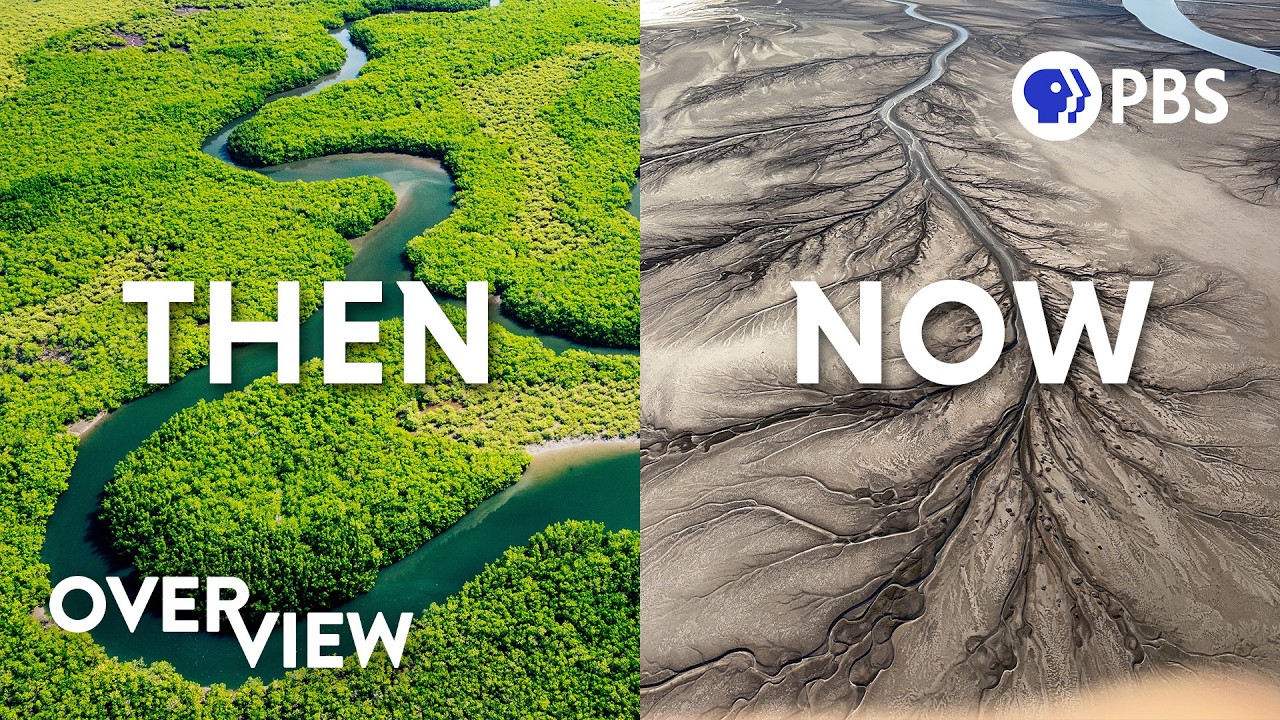
Who Killed the Colorado River?
Keywords
Summary
199 words
Critical Evaluation
Value of the Information & Strength of the Argument
The video provides a valuable and accessible overview of the complex factors leading to the Colorado River’s decline. It effectively quantifies water usage across different sectors, highlighting the surprising dominance of agriculture and the specific role of alfalfa production. The argumentation is structured as a detective investigation, which makes the information engaging and easy to follow. The inclusion of expert interviews, particularly from restoration ecologists in Mexico, adds credibility and provides concrete evidence of successful interventions. The video also touches on the historical context of water law, explaining how outdated agreements from 1922 continue to shape current water management challenges. However, the argumentation simplifies some nuances, such as the political and legal complexities of water rights negotiations, and does not deeply explore potential solutions beyond the restoration example. Overall, the video presents a compelling and well-supported case for the multiple causes of the river’s depletion, though it could benefit from a more critical examination of proposed policy changes.
Scientific Rigor, Source Quality, Title Accuracy
The video demonstrates a strong commitment to scientific rigor by featuring interviews with experts, including a hydrologist and restoration ecologists, and by presenting data on water consumption and ecological recovery. The use of drone footage and on-site visits to the delta and agricultural areas enhances the visual evidence. However, the video does not provide explicit citations for many of its statistics, such as the exact percentages of water use or the historical flow data, which would strengthen its credibility. The title ‘Who Killed the Colorado River?’ is highly appropriate, as it frames the content as an investigation and accurately reflects the video’s structure. The video’s production quality is high, with clear narration and compelling visuals. The comments section reflects a highly engaged audience, with many viewers sharing personal experiences and expressing concern about the river’s future, indicating that the content resonates emotionally and intellectually.
317 words
Title / Content Match
The title accurately reflects the investigative approach and central question of the video, which systematically examines various factors contributing to the river's depletion.
Quality & Reliability
8/10
The video presents a well-structured investigation into the Colorado River's decline, citing historical agreements, infrastructure impacts, and ecological data. It features expert interviews and restoration success metrics, though it lacks detailed citations for some claims and simplifies complex legal and political aspects.
Key Moments
Markers derived by PSI from the transcript: the creator did not define chapters.
- Introduction to the Colorado River's historical significance and current state.
- Explanation of the 1922 Colorado River Compact and its over-allocation of water.
- Discussion of the impact of dams on the river's flow and evaporation losses.
- Introduction of the Central Arizona Project and urban water consumption.
- Examination of the role of wetlands and their water usage.
- Focus on agriculture as the largest water consumer, particularly alfalfa.
- Exploration of the Salton Sea and the consequences of agricultural runoff.
- Showcase of restoration efforts in the Colorado River Delta and their success.
- Conclusion emphasizing the need for a new relationship with water and hope for the future.
Cited Sources
- PBS Donate — Link to support PBS Terra and member stations.
- Weathered: Earth's Extremes — Promotion of a related PBS series on climate and weather.
Concurring Sources
- Colorado River Compact — Provides historical details on the water allocation agreement.
- Salton Sea — Explains the formation and current issues of the Salton Sea.
- Central Arizona Project — Describes the infrastructure and purpose of the canal system.
Contribution & Novelties
The video provides a comprehensive and visually engaging synthesis of the Colorado River crisis, effectively communicating the complex interplay of historical policies, infrastructure, and agricultural practices. Its main contribution is in making this multifaceted issue accessible to a broad audience, using a detective-style narrative to highlight the disproportionate impact of agriculture, particularly alfalfa cultivation, on water resources. The inclusion of successful restoration efforts in Mexico offers a tangible example of positive action, which is often missing from discussions of environmental degradation.
Pour aller plus loin :
- Colorado River Compact — Historical context of the 1922 agreement and its implications.
- Salton Sea — Overview of the lake formed by agricultural runoff and its environmental challenges.
- Central Arizona Project — Details on the canal system and its role in water distribution.
- Alfalfa — Information on the crop’s water requirements and uses.
- Colorado River Delta — Background on the delta’s ecology and restoration efforts.
151 words
Radar Profile
The radar profile shows high scores in information quantity, quality, and reliability, indicating a well-researched and informative video. The technical level is moderate, suggesting it is accessible to a general audience while still providing substantive content. The overall balance reflects a strong educational piece with a clear narrative.
💬 Négatif. Sur les 30 commentaires analysés, la majorité exprime frustration et inquiétude face à la gestion de l'eau, critiquant notamment l'agriculture et les politiques obsolètes, tout en partageant des expériences personnelles de déclin du fleuve.