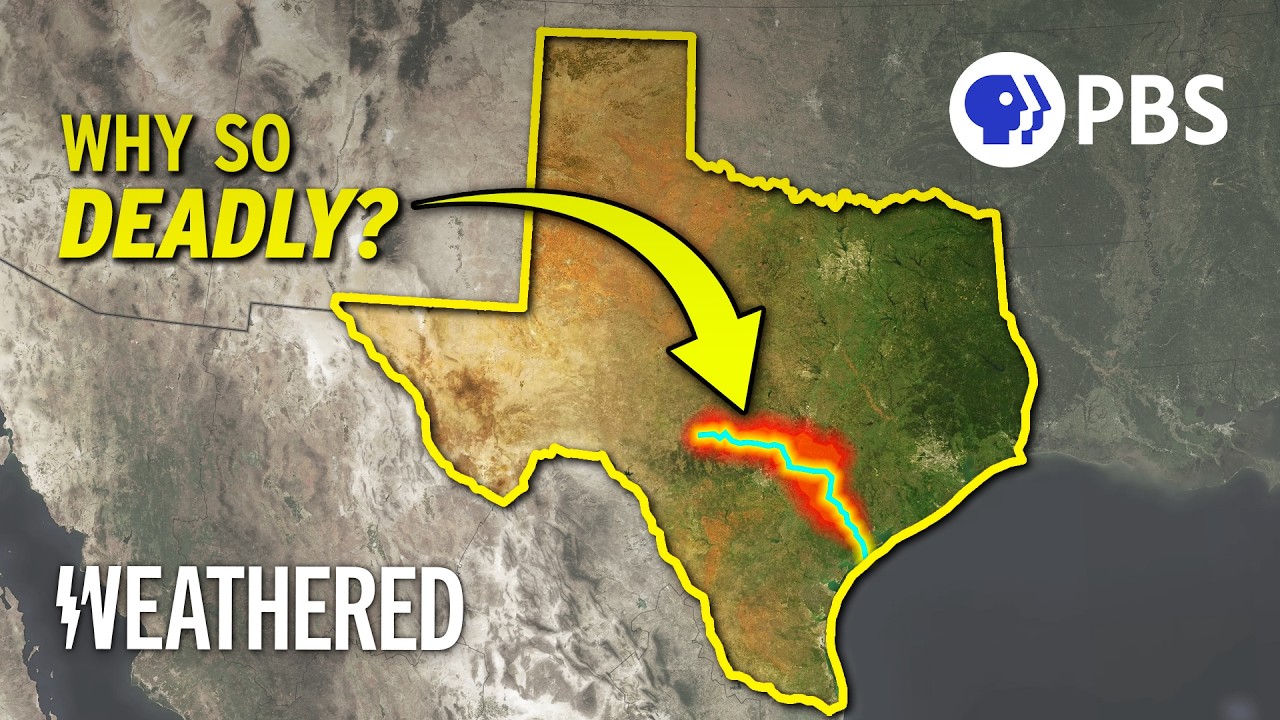
Is This the Most Dangerous River in America?
Keywords
Summary
210 words
Critical Evaluation
Value of the Information & Strength of the Argument
The video provides valuable information by combining scientific explanations with real-world case studies, making complex meteorological and hydrological concepts accessible. The argumentation is solid, supported by expert interviews, data from the 2025 flood, and comparisons with other rivers in the region. The narrative effectively builds a case for why the Guadalupe is uniquely dangerous, addressing both natural and human factors. The inclusion of specific examples, such as the differing outcomes at HTR and Blue Oaks RV parks, strengthens the argument about the critical role of warning systems. The video also presents potential solutions, such as River Sentry and Watch Duty, which are grounded in current research and practical applications.
Scientific Rigor, Source Quality, Title Accuracy
The video demonstrates strong scientific rigor, with explanations that align with established knowledge in meteorology and hydrology. It cites the National Weather Service and features interviews with experts, though it does not provide direct references to peer-reviewed studies. The title accurately reflects the content, which is a focused investigation into the Guadalupe River’s danger. The video includes promotional segments for PBS Terra and a Webby nomination, but these do not detract from the core scientific content. The public comments show a mix of appreciation for the informative content and criticism regarding the lack of effective warning systems, with some users sharing personal experiences that corroborate the video’s points.
232 words
Title / Content Match
The title accurately reflects the content, which investigates why the Guadalupe River is considered the most dangerous river in the US, focusing on the 2025 flood and the underlying science.
Quality & Reliability
8/10
The video is produced by PBS Terra, a reputable science communication channel, and features interviews with experts, references to scientific concepts, and data from the 2025 flood event. The information is well-structured and aligns with established meteorological and hydrological knowledge. However, some claims lack direct citations to peer-reviewed studies, and the video includes promotional segments.
Key Moments
Markers derived by PSI from the transcript: the creator did not define chapters.
- Introduction to the Guadalupe River and the 2025 flood tragedy.
- Explanation of Flash Flood Alley and the meteorological factors.
- Geological and topographical reasons for the river's danger.
- Comparison with other rivers in the region.
- Human factors: lack of warning systems and remote locations.
- Case study of HTR and Blue Oaks RV parks.
- New warning systems like River Sentry and Watch Duty.
Cited Sources
- PBS Terra Donate — Support link for PBS member stations.
- Weathered Merch — Merchandise store for the Weathered series.
- Earth Month Playlist — Playlist of Earth Month content from PBS.
- Trail Mix’d — Related video from Arizona PBS about the Chiricahua Mountains.
Concurring Sources
- National Weather Service — Provides official weather warnings and flood alerts, consistent with the video's emphasis on early warning systems.
Dissenting Sources
- Comment on 'Dixie' nickname — Several commenters noted that the term 'Dixie' is not commonly used for the Guadalupe River in Texas, contradicting the video's use of the nickname.
Contribution & Novelties
The video provides a comprehensive and accessible explanation of why the Guadalupe River is uniquely dangerous, combining meteorological, geological, and human factors. It offers a detailed case study of the 2025 flood, highlighting the failures in warning systems and the importance of local knowledge. The introduction of new monitoring technologies like River Sentry and the use of apps like Watch Duty represents a forward-looking approach to flood mitigation.
Pour aller plus loin :
- Flash flood — Provides general information on flash floods and their causes.
- Balcones Escarpment — Geological feature that contributes to the region’s flood risk.
- National Weather Service — Official source for weather warnings and flood alerts.
- Watch Duty — App mentioned in the video for real-time fire and flood alerts.
123 words
Radar Profile
The radar profile shows high scores in information quantity, quality, and reliability, with a slightly lower score in technical level, indicating that the content is well-researched and credible but may not delve into highly technical details. The overall balance suggests a strong educational resource.
💬 Positive and engaged. On the 30 comments analyzed, viewers expressed appreciation for the informative content and shared personal experiences, while also raising concerns about the lack of effective warning systems and the misuse of the term 'Dixie'.