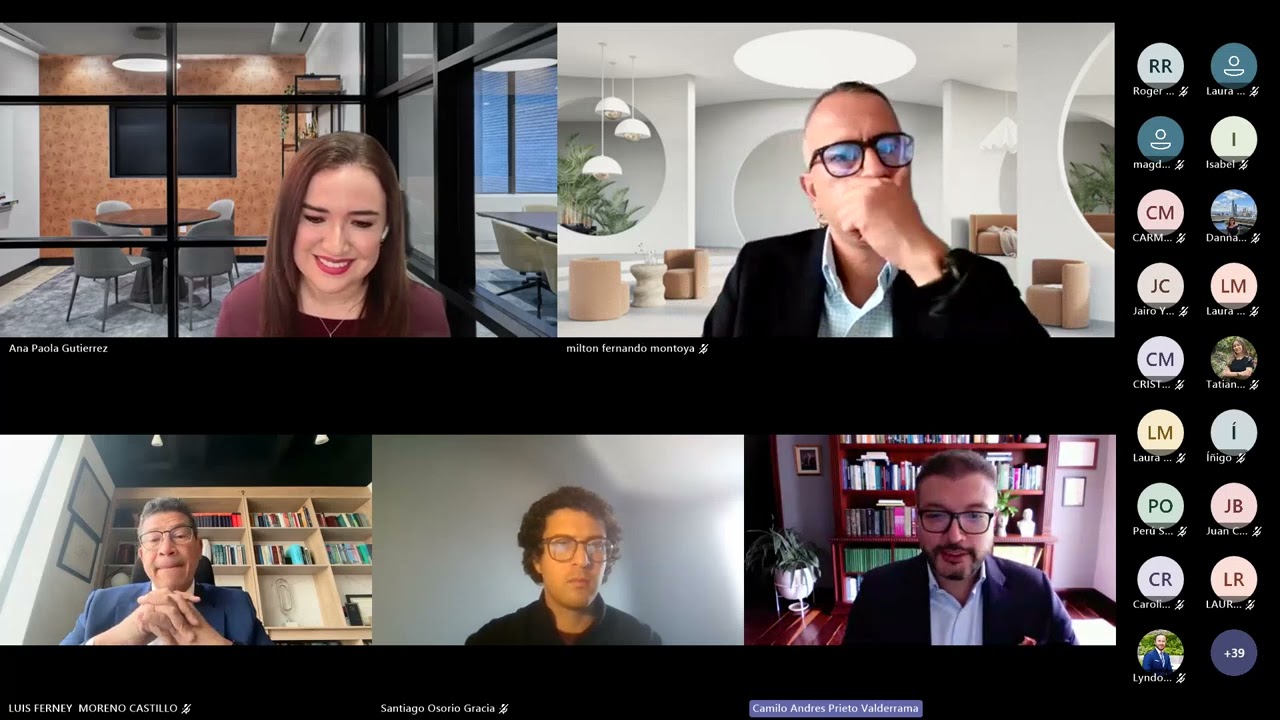
Webinar sobre la Ley Nuclear hacia la conformación de un derecho nuclear en Colombia
Webinar on Nuclear Law towards the formation of nuclear law in Colombia
Keywords
Summary
161 words
Critical Evaluation
Value of the Information & Strength of the Argument
The webinar provides valuable insights into the legal and regulatory aspects of nuclear technology in Colombia, a topic of growing importance. The speakers present a well-structured argument for the necessity of a modern nuclear regulatory framework, drawing on technical explanations, historical context, and comparative legal analysis. The discussion is balanced, acknowledging both the benefits and risks of nuclear technology, and emphasizes the need for a comprehensive approach that includes medical, industrial, and energy applications. The argumentation is solid, supported by references to international organizations and examples from other countries, though it lacks detailed citations and quantitative data in some segments.
Scientific Rigor, Source Quality, Title Accuracy
The webinar demonstrates a high level of scientific rigor in its technical explanations, particularly from the medical and engineering expert, who provides clear distinctions between research and power reactors, and between peaceful and military uses. The legal experts offer a thorough analysis of the regulatory theory and comparative law, grounding their arguments in established legal principles. However, the sources cited are primarily institutional and general, with no specific academic references or data sources provided. The title accurately reflects the content, which is focused on the Nuclear Law and the development of nuclear law in Colombia. The webinar is well-structured and informative, though it could benefit from more explicit citations and references to support its claims.
230 words
Title / Content Match
The title accurately reflects the content, which focuses on the Nuclear Law and the development of nuclear law in Colombia.
Quality & Reliability
7/10
The webinar features expert speakers with relevant academic and professional backgrounds, providing a balanced discussion on nuclear regulation in Colombia. The content is well-structured and grounded in legal and technical knowledge, though it lacks formal citations and peer-reviewed references.
Key Moments
Markers derived by PSI from the transcript: the creator did not define chapters.
- Introduction by the moderator, Ana Paola, setting the context for the webinar on nuclear law in Colombia.
- Presentation of the panelists, including their backgrounds and expertise.
- Dr. Camilo Valderrama begins his technical presentation on nuclear technologies and their applications.
- Discussion on the medical applications of nuclear technology, including isotopes for cancer treatment.
- Explanation of the difference between research and power reactors, and the regulatory barriers in Colombia.
- Dr. Valderrama addresses safety concerns, referencing Chernobyl and Fukushima, and highlights the low emissions and land use efficiency of nuclear energy.
- Dr. Luis Ferney Moreno begins his legal analysis on the justification for regulating nuclear activity.
- Discussion on the theory of regulation and the high risks associated with nuclear technology.
- Comparative analysis of nuclear regulatory frameworks in other countries.
- Conclusion of the webinar with a summary of key points and the need for further discussion.
Cited Sources
- International Atomic Energy Agency (IAEA) — Mentioned as an international institution consulted during the development of the Nuclear Law.
- World Institute for Nuclear Security (WINS) — Mentioned as an international institution and the speaker's affiliation.
- Colombian Geological Service (Servicio Geológico Colombiano) — Identified as the current nuclear operator and regulator, highlighting regulatory capture.
Concurring Sources
- International Atomic Energy Agency (IAEA) — The IAEA's standards and guidelines align with the webinar's emphasis on safety and regulatory best practices.
- World Institute for Nuclear Security (WINS) — WINS promotes nuclear security best practices, consistent with the webinar's focus on institutional strengthening.
Dissenting Sources
- No discordant sources identified — The webinar presents a balanced view, and no conflicting sources were mentioned.
Contribution & Novelties
The webinar provides a comprehensive overview of the recent Colombian Nuclear Law and the regulatory challenges ahead, offering a multi-disciplinary perspective that is rare in public discourse. It highlights the specific issue of regulatory capture and the need for institutional reform, which is a novel contribution to the national debate. The discussion also emphasizes the broader applications of nuclear technology beyond electricity generation, which is often overlooked.
Pour aller plus loin :
- Nuclear law - Wikipedia — Provides a general overview of nuclear law principles and international frameworks.
- International Atomic Energy Agency (IAEA) — The primary international body for nuclear regulation and safety standards.
- Nuclear power in Colombia - Wikipedia — Offers context on Colombia’s nuclear history and current status.
120 words
Radar Profile
The radar profile shows high scores in quantity of information and technical level, reflecting the in-depth discussion and expert contributions. The quality of information and global reliability are slightly lower, indicating a need for more explicit citations and data. Overall, the webinar is informative and credible, with room for enhanced sourcing.