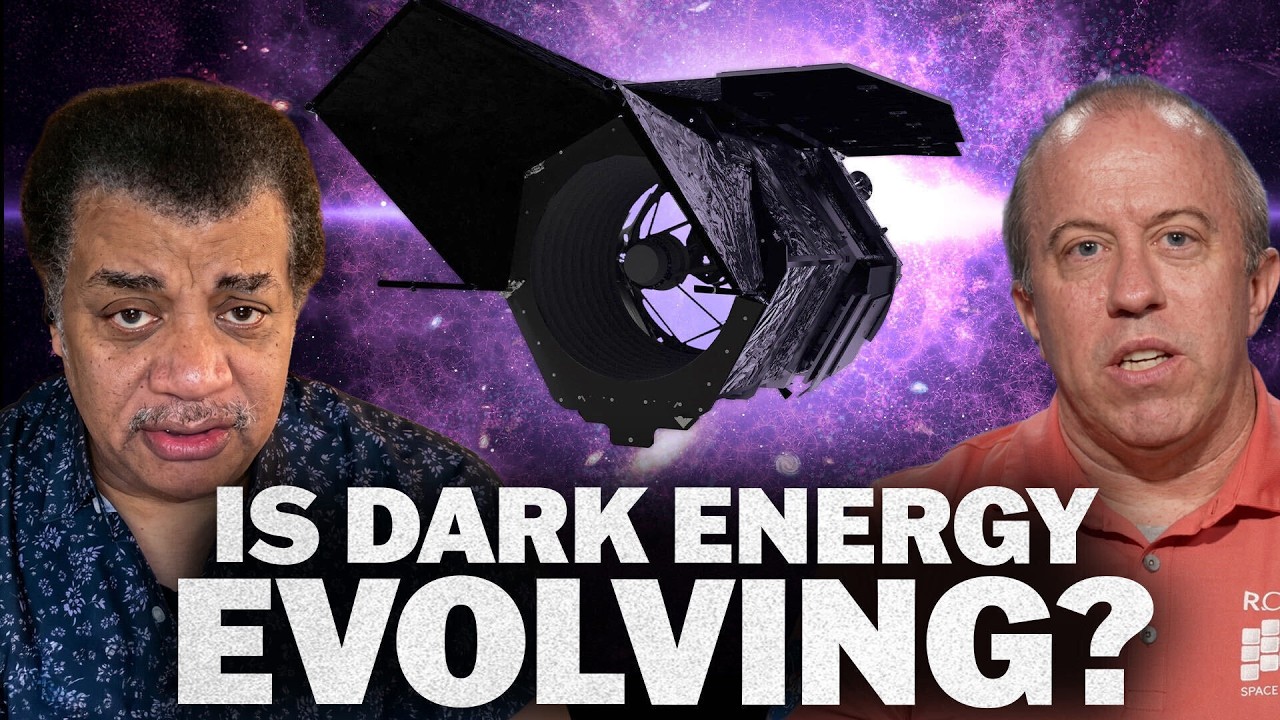
All About The New Telescope NASA Just Launched, with Jason Rhodes
Keywords
Summary
140 words
Critical Evaluation
Value of the Information & Strength of the Argument
The value of the information is high, as it provides a clear and detailed explanation of the scientific methods and goals of the Roman Space Telescope. The argumentation is solid, grounded in the expertise of Jason Rhodes and the established scientific consensus on dark energy and dark matter. The discussion is well-structured, moving from the telescope’s design to its specific observational strategies, and it effectively communicates complex concepts in an accessible manner. The use of multiple independent methods to study dark energy is presented as a strength, and the potential for new physics is discussed with appropriate scientific caution.
Scientific Rigor, Source Quality, Title Accuracy
The scientific rigor is high, with accurate descriptions of the techniques and phenomena involved. The sources cited are primarily the guest’s expertise and the mission’s official information, though no specific publications are referenced. The title accurately reflects the content, which is a comprehensive overview of the telescope and its scientific objectives. The discussion is consistent with current cosmological knowledge, and the potential for resolving the Hubble tension is presented with appropriate nuance.
186 words
Title / Content Match
The title accurately reflects the content: a detailed discussion about the Nancy Grace Roman Space Telescope and its scientific goals, led by an expert.
Quality & Reliability
8/10
High-quality expert discussion with a senior NASA scientist, covering multiple independent methods for studying dark energy. The content is scientifically accurate and well-contextualized, though it remains a conversational podcast rather than a peer-reviewed source.
Chapters
- Introduction: Jason Rodes
- The Nancy Grace Roman Telescope
- Too Many Satellites?
- How do you see Dark Energy?
- Resolving Hubble Tension
- Is Dark Energy Not Constant?
- The Coronagraph Taking Direct Images of Exoplanets
- Mapping the Dark Matter
- Discovering Exoplanets Through New Methods
- Detecting Rogue Planets
- Getting a Whole World in a Pixel
- Euclid Update
- Dark Matter & Dark Energy
Cited Sources
- Take Me to Your Leader (book) — Mentioned in the video description as a book by Neil deGrasse Tyson.
Concurring Sources
- NASA Roman Space Telescope — Official NASA mission page, consistent with the information presented.
Contribution & Novelties
The episode provides a timely and expert overview of the Roman Space Telescope’s mission, emphasizing its multi-pronged approach to dark energy research. It offers valuable insights into the telescope’s capabilities and the scientific questions it aims to address, including the Hubble tension and the nature of dark energy. The discussion of the coronagraph and its technology demonstration role adds depth to the public understanding of the mission.
Pour aller plus loin :
- Nancy Grace Roman Space Telescope — Overview of the mission and its instruments.
- Dark Energy — Background on the phenomenon and its discovery.
- Weak gravitational lensing — Explanation of the technique used to map dark matter.
108 words
Radar Profile
The radar profile shows high scores in information quality and technical level, reflecting the expert-led discussion. The quantity of information is also strong, but the overall reliability is slightly lower due to the conversational format and lack of cited sources.