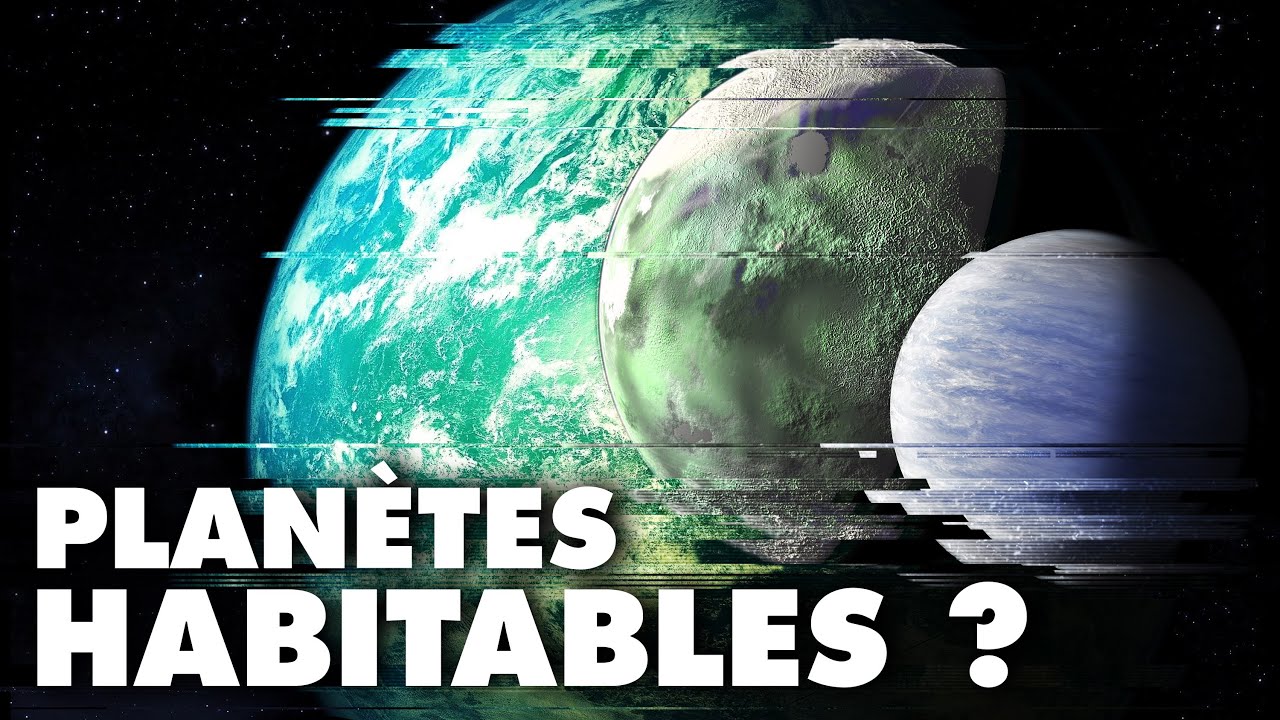
D'étranges planètes HABITABLES ?
Strange HABITABLE planets?
Keywords
Summary
181 words
Critical Evaluation
Value of the Information & Strength of the Argument
The video provides a comprehensive and up-to-date overview of the TRAPPIST-1 system, synthesizing data from multiple scientific sources. It effectively communicates complex concepts such as tidal locking, the habitable zone, and the potential for ocean planets. The argumentation is solid, clearly distinguishing between confirmed facts (e.g., planet sizes and distances) and speculative scenarios (e.g., atmospheric composition and surface conditions). The use of simulations and theoretical models is well-explained, and the video acknowledges uncertainties, enhancing its credibility. The narrative is engaging and poetic, but it does not oversimplify the science, making it valuable for both general audiences and those with some background in astronomy.
Scientific Rigor, Source Quality, Title Accuracy
The video demonstrates strong scientific rigor by citing numerous reputable sources, including NASA, arXiv papers, and exoplanet databases. The information is accurate and reflects the state of knowledge as of 2020. The title accurately reflects the content, which focuses on the potential habitability of exoplanets, particularly in the TRAPPIST-1 system. The video also includes a brief sponsored segment for NordVPN, which is clearly disclosed and does not detract from the scientific content. The comments are overwhelmingly positive, with viewers praising the video’s beauty, clarity, and emotional impact, though some note the speculative nature of the content.
214 words
Title / Content Match
The title accurately reflects the content, which explores the potential habitability of exoplanets, focusing on the TRAPPIST-1 system.
Quality & Reliability
8/10
The video is based on established scientific data and models, citing multiple peer-reviewed sources and databases. It clearly distinguishes between confirmed facts and speculative scenarios, and acknowledges uncertainties in atmospheric composition and habitability.
Key Moments
Markers derived by PSI from the transcript: the creator did not define chapters.
- Introduction to exoplanets and the TRAPPIST-1 system
- Description of the TRAPPIST-1 star and its seven planets
- Discussion of the inner planets and their likely inhospitable conditions
- Focus on the habitable zone planets, especially TRAPPIST-1e
- Exploration of ocean planets and their potential characteristics
- Discussion of atmospheric uncertainties and the example of Gliese 581c
- Challenges posed by red dwarf stars, including stellar flares
- Implications for the search for life and the prevalence of red dwarfs
- Conclusion and reflection on the diversity of possible worlds
Cited Sources
- Exoplanet.eu Catalog — Catalog of known exoplanets
- Habitable Exoplanets Catalog — Catalog of potentially habitable exoplanets
- NASA Exoplanet Archive — Database of exoplanet data
- NASA Exoplanet Exploration — NASA's exoplanet exploration page
- arXiv: 1802.01377 — Paper on TRAPPIST-1 planets
- arXiv: 1105.3544 — Paper on exoplanet habitability
- arXiv: 1707.06927 — Paper on TRAPPIST-1 system
- Habitability of Red Dwarf Systems — Wikipedia article on red dwarf habitability
- NASA TRAPPIST-1 Page — NASA's dedicated page for TRAPPIST-1
- NASA Press Release — NASA announcement of TRAPPIST-1 discovery
- PNAS Article — Paper on exoplanet habitability
- Exoplanets.org — Exoplanet database
- ESEP Exoplanets — French exoplanet education site
- AMNH Digital Universe — Software for visualizing the universe
- Eyes on Exoplanets — NASA interactive exoplanet visualization
- Wikiwand: Types de planètes — French Wikipedia article on planet types
Concurring Sources
- NASA Exoplanet Archive — Confirms the existence and properties of TRAPPIST-1 planets
- arXiv: 1802.01377 — Peer-reviewed paper on TRAPPIST-1 planet properties
- Habitability of Red Dwarf Systems — Supports the discussion on red dwarf habitability
Dissenting Sources
- No discordant sources found — All cited sources are consistent with the video's content.
External References
Contribution & Novelties
The video provides a compelling and accessible synthesis of the current knowledge about the TRAPPIST-1 system, highlighting the potential for ocean planets and the challenges posed by red dwarf stars. It effectively communicates the scientific uncertainties and the ongoing research, making it a valuable resource for science communication.
Pour aller plus loin :
- TRAPPIST-1 — Overview of the TRAPPIST-1 system.
- Ocean planet — Concept of ocean planets.
- Habitability of red dwarf systems — Detailed discussion of red dwarf habitability.
- Exoplanet — General information on exoplanets.
- James Webb Space Telescope — Future observations of exoplanet atmospheres.
95 words
Radar Profile
The radar profile shows high scores across all dimensions, indicating a well-balanced and reliable video. The strong scores in information quantity and quality reflect the comprehensive coverage of the topic, while the high technical level and global reliability underscore its scientific credibility.
💬 Très positif. Sur les 30 commentaires analysés, les spectateurs expriment une admiration unanime pour la beauté et la qualité scientifique de la vidéo, soulignant son caractère poétique et immersif.