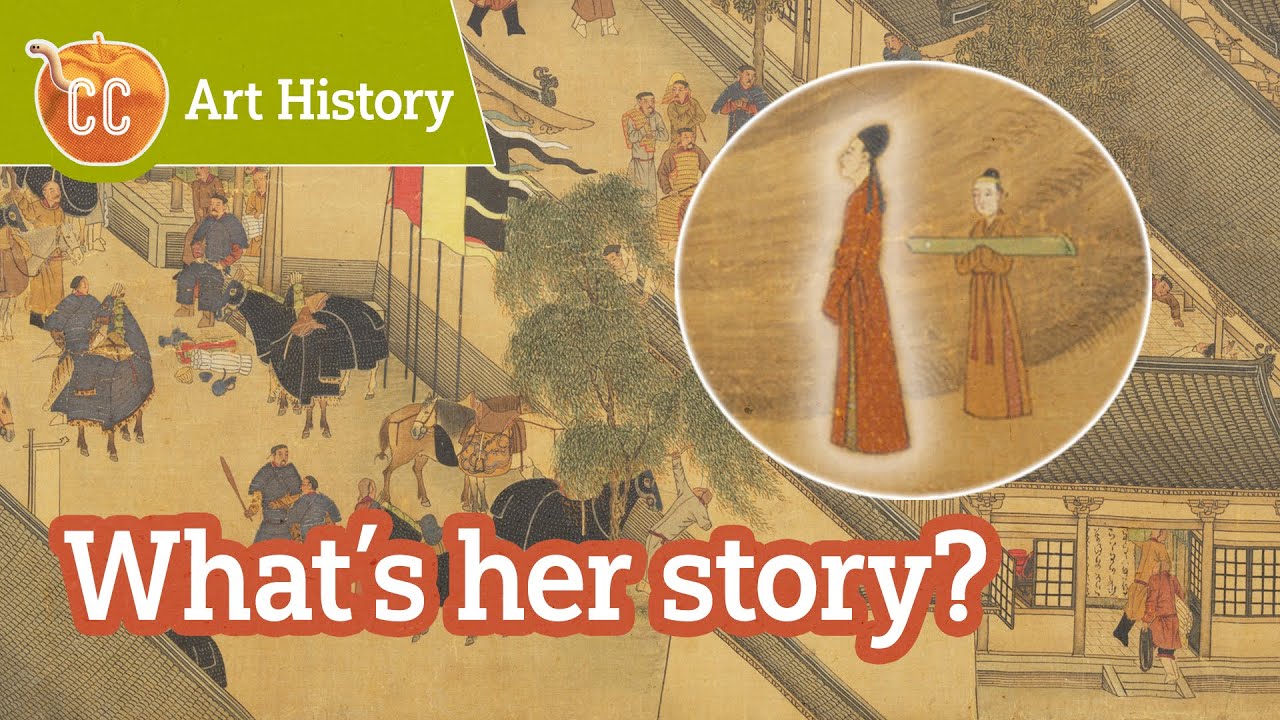
How Does Art Tell Stories? : Crash Course Art History #7
Keywords
Summary
151 words
Critical Evaluation
Value of the Information & Strength of the Argument
The video provides valuable insights into the role of art in storytelling and historical representation. It effectively argues that art is not just a reflection of history but an active participant in shaping narratives. The examples chosen are diverse and well-explained, illustrating how art can convey personal, political, and cultural stories. The argumentation is solid, building a case that art offers a more nuanced and human perspective than traditional historical accounts. The host’s engaging style and clear explanations make complex concepts accessible without oversimplifying.
Scientific Rigor, Source Quality, Title Accuracy
The video maintains a high level of scientific rigor for an educational piece. It references specific artworks and historical contexts, and provides a linked document with sources for further verification. The title accurately reflects the content, and the episode stays on topic throughout. The production quality is high, and the information is presented in a balanced manner, acknowledging scholarly debates where they exist. The video does not shy away from discussing controversial aspects, such as the racial prejudice faced by Aaron Douglas, which adds to its credibility.
186 words
Title / Content Match
The title accurately reflects the content, which explores how art has been used to tell stories across cultures and time periods.
Quality & Reliability
8/10
The video is produced by CrashCourse, a well-established educational channel, and hosted by Sarah Urist Green, an art historian. It presents a balanced overview of narrative art, citing specific artworks and historical contexts, and provides a sources document for further reference. The content is well-researched and aligns with academic consensus, though it simplifies complex debates for a general audience.
Key Moments
Markers derived by PSI from the transcript: the creator did not define chapters.
- Introduction to narrative art and its role in human history
- Discussion of history as story, featuring the Chinese handscroll '18 Songs of a Nomad Flute'
- Exploration of contradictory stories in art, using Mesopotamian reliefs as examples
- Examination of official and unofficial stories, focusing on Aaron Douglas's murals
- Review and credits
Cited Sources
- Sources document — List of sources referenced in the episode
- Image descriptions — Accessibility descriptions for images shown in the video
Concurring Sources
- CrashCourse Art History series — The series provides consistent educational content on art history.
External References
Contribution & Novelties
The video offers a fresh perspective on how art functions as a medium for storytelling, emphasizing the multiplicity of narratives and the importance of considering marginalized voices. It connects ancient and modern examples to show the enduring power of visual narratives.
Pour aller plus loin :
- Narrative art — Overview of narrative art as a genre.
- Lady Wenji — Historical figure featured in the Chinese handscroll.
- Julie Mehretu — Artist whose work challenges conventional mapping.
- Aaron Douglas — Harlem Renaissance artist discussed in the episode.
- Harlem Renaissance — Cultural movement that provided context for Douglas’s work.
96 words
Radar Profile
The radar profile shows high scores in information quantity, quality, and reliability, with a slightly lower technical level, reflecting the accessible yet informative nature of the content. The balance between these dimensions indicates a well-rounded educational resource.
💬 Sur les 0 commentaires analysés, aucune tendance n'est disponible.