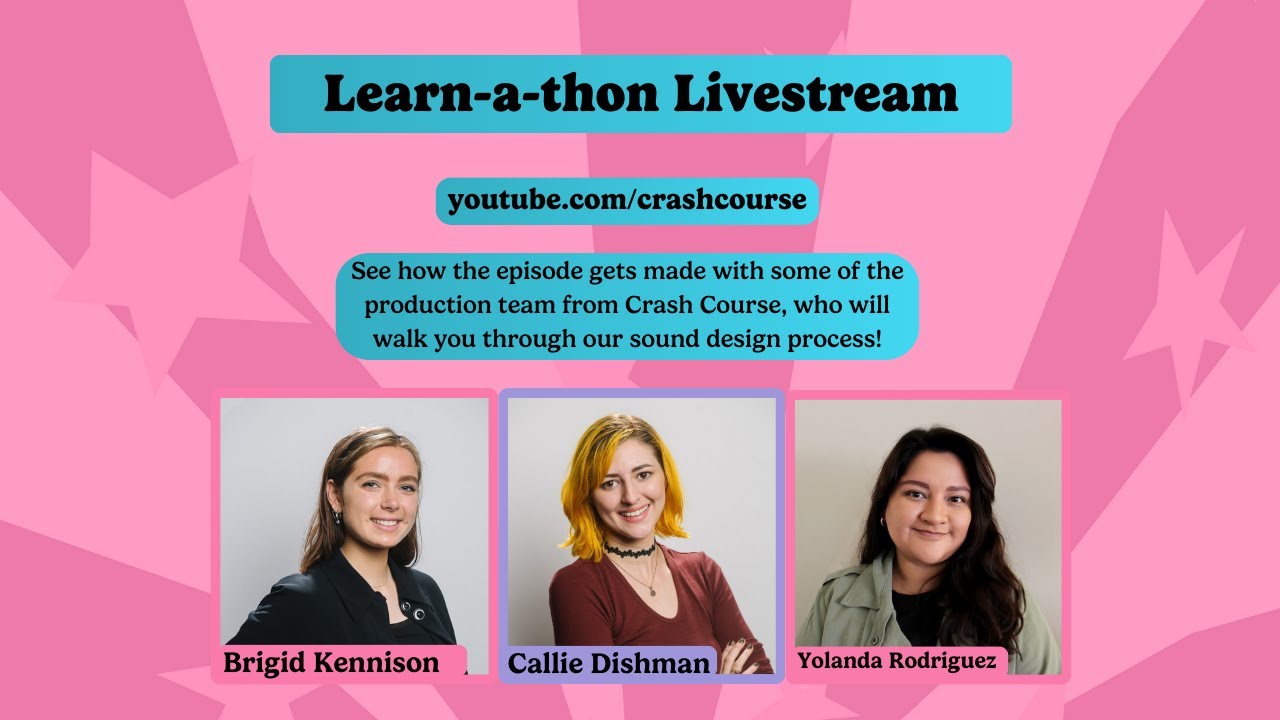
Making of Crash Course: Live Sound Design with the Team! #Learnathon2024
Keywords
Summary
137 words
Critical Evaluation
Value of the Information & Strength of the Argument
The video offers valuable, practical insights into the sound design process for educational video content. The argumentation is based on the direct experience of the team, providing concrete examples and demonstrations. The explanations are clear and accessible, making complex audio concepts understandable. The value lies in the transparency of the workflow and the specific techniques shared, which can be useful for aspiring sound designers and video editors. The argumentation is solid, as it is grounded in real-world practice and demonstrated live, though it lacks formal scientific rigor.
Scientific Rigor, Source Quality, Title Accuracy
The video is a live demonstration, so the scientific rigor is limited to the practical application of audio engineering principles. The sources are primarily the team’s own experience and the software they use, with no external citations. The title accurately describes the content, and the video fulfills its promise of showing the sound design process. The adéquation between title and content is strong, as the video is exactly what the title suggests. The lack of formal sources is compensated by the authenticity of the live demonstration.
188 words
Title / Content Match
The title accurately reflects the content: a live session where the team explains and demonstrates the sound design process for Crash Course episodes.
Quality & Reliability
7/10
The video is a live documentary featuring the sound designer and editors of Crash Course, providing a direct, first-hand account of their workflow. The information is practical and demonstrated in real-time, but it is based on personal experience rather than formal research, and some technical details are simplified.
Key Moments
Markers derived by PSI from the transcript: the creator did not define chapters.
- Introduction of the team and overview of the session.
- Explanation of the signal chain: EQ, gate, compressor, de-esser.
- Demonstration of before and after audio processing.
- Discussion on adjusting EQ for different voice types.
- Music selection process and collaboration between producer and editor.
- Demonstration of music integration and its impact on editing.
- Explanation of the final mixing process in Premiere.
- Q&A session with the audience.
Cited Sources
- Complexly Learn-a-thon — Event page for the Learn-a-thon, mentioned as part of the video's context.
Concurring Sources
- Complexly Learn-a-thon — Official event page, consistent with the video's purpose.
Contribution & Novelties
The video provides an insider’s look at the sound design workflow for a popular educational YouTube channel, offering practical tips and demonstrating the use of specific plugins and software. It highlights the collaborative process between sound designers and editors, which is rarely shown in such detail.
Pour aller plus loin :
- Audio signal processing — Overview of the techniques used.
- Dynamic range compression — Explanation of compression, a key tool discussed.
- Noise gate — Details on the noise gate plugin used.
81 words
Radar Profile
The radar shows a balanced profile with slightly higher scores in information quantity and quality, reflecting the practical and detailed nature of the content. The technical level is moderate, suitable for a general audience, while reliability is high due to the first-hand experience shared.